Here is a fact that annoys people: most beef stew recipes fail not because of the beef, but because of the lid. You either drown the meat in liquid and get soup, or you leave it uncovered and get dry, stringy cubes. The fix is boring and precise, and I will give you the exact numbers.
Advertisements1
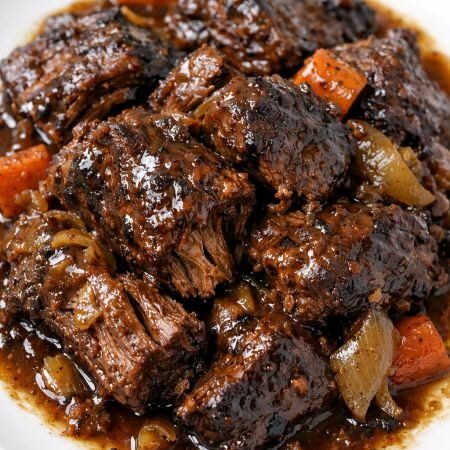
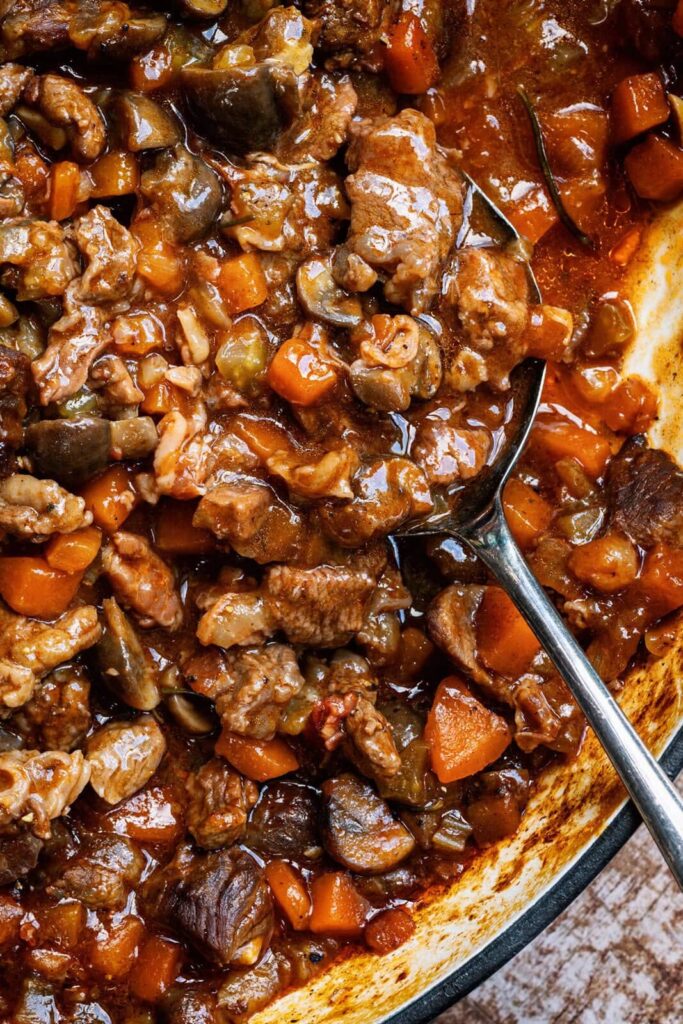
This Beef Stew In Pot is the version I make in a 5.5-quart Dutch oven on cold Sundays. Chuck roast, a real sear at 450F (232C), a low simmer at 300F (149C), and a final uncovered blast to thicken the gravy. No flour slurry, no wine you have to finish, no slow cooker babysitting.
One honest warning: this is not a 30-minute dinner. It is a 2-hour pot that mostly cooks itself while you do something else. That trade is the whole point.
Why You'll Love This Recipe
About the Ingredients
3 lb (1.36 kg) boneless beef chuck roast, cut into 1 1/2-inch cubes
Chuck is the right cut because its collagen melts into gelatin and makes the gravy silky. If chuck is sold out, buy boneless short rib or bottom round and add 15 extra minutes of braising.
2 tsp kosher salt, plus more to taste
Kosher salt dissolves and seasons evenly; if you only have table salt, use 1 1/2 tsp because the crystals are finer and saltier by volume. Season the cubes right before searing so the surface stays dry.
1 tsp freshly ground black pepper
Fresh-cracked pepper tastes brighter than pre-ground, which goes flat within months. No grinder? Crush whole peppercorns with the bottom of a heavy skillet.
3 tbsp (45 ml) neutral oil, such as canola or grapeseed
High smoke point matters here because you are searing at 450F (232C). Olive oil will smoke and turn bitter, so save it for the vegetables.
2 medium yellow onions, cut into 1-inch chunks
Yellow onions give the deepest sweetness once they soften. Sweet onions work too, but red onions turn muddy and slightly bitter in long braises.
4 medium carrots, peeled and cut into 2-inch lengths
Cut them thick so they survive 90 minutes in the oven; thin coins turn to mush. Parsnips or whole baby carrots are fine swaps, no timing change.
1 lb (454 g) baby Yukon Gold potatoes, halved
Baby Yukons hold their shape and go creamy inside. Russets will break down and thicken the gravy a lot, which is fine but gives you a starchy, cloudier sauce.
3 tbsp (24 g) all-purpose flour
Flour is what turns the pan juices into gravy. For gluten-free, use 2 tbsp cornstarch whisked into 1/4 cup cold water at the very end instead.
3 cups (720 ml) low-sodium beef broth
Low-sodium lets you control the final seasoning; full-salt broth plus 2 tsp salt gets too salty after reduction. Chicken broth works in a pinch but tastes lighter.
2 tbsp (30 g) tomato paste
Tomato paste adds body and a savory backbone without tasting tomatoey. If you are out, 1 tbsp Worcestershire sauce covers similar ground.
2 dried bay leaves and 1 tsp dried thyme
Dried herbs are correct for a long braise because fresh thyme fades. Fish the bay leaves out before serving; they stay hard and bitter.
Tips & Tricks
- Do not crowd the pot when searing. If the cubes touch, they steam instead of brown, and you lose the fond that flavors the whole gravy. Sear in three batches if your pot is small.
- Brown means brown, not gray. Each side needs 2 to 3 minutes at 450F (232C) until it releases from the pan on its own. If it sticks, it is not ready to flip.
- Keep the liquid level at two-thirds up the meat, not covering it. Too much broth and you boil the flavor away; too little and the top layer dries out before it tenderizes.
- Salt at the end, not the start. The gravy reduces by roughly a quarter, which concentrates whatever salt you added early.
Pro Tips
Step-by-Step Instructions
1. Heat Oven and Dry Beef
Set a rack in the lower third of the oven and preheat to 450F (232C). Pat the cubed chuck completely dry with paper towels, then toss with 2 tsp kosher salt and 1 tsp black pepper.
2. Sear in Batches
Heat 2 tbsp oil in a 5.5-quart Dutch oven over medium-high until it shimmers, about 2 minutes. Add half the beef in a single layer and sear 2 to 3 minutes per side, about 8 minutes total, until deeply golden brown and it releases on its own. Move to a plate and repeat with the remaining oil and beef.
3. Soften Onions and Carrots
Pour off all but 2 tbsp fat, lower heat to medium, and add the onions and carrots. Cook 5 to 6 minutes, stirring, until the onions are translucent and the edges pick up color.
4. Toast Flour and Tomato
Sprinkle the 3 tbsp flour over the vegetables and stir constantly for 60 seconds until it smells toasted and no dry patches remain. Stir in the 2 tbsp tomato paste and cook 1 minute more until it darkens to brick red.
5. Deglaze and Return Beef
Pour in 1 cup of the beef broth and scrape the browned bits off the bottom with a wooden spoon, which is where most of your flavor lives. Add the remaining broth, the beef and its juices, the bay leaves, and the thyme.
6. Braise Covered at 300F
Cover and transfer to the oven. Braise at 300F (149C) for 90 minutes, until a cube of beef shreds with light pressure from a fork and reads 200F to 205F (93C to 96C) on an instant-read thermometer.
7. Add Potatoes and Finish
Stir in the halved baby potatoes, return covered, and bake another 30 minutes at 300F (149C) until a potato pierces easily with a paring knife. Remove the lid and bake 15 minutes more at 425F (218C), until the gravy bubbles at the edges and coats a spoon.
8. Rest and Serve
Discard the bay leaves, taste, and add salt in 1/4 tsp increments until the gravy tastes full rather than flat. Rest off the heat 10 minutes, then serve in warm bowls with crusty bread.
Delicious Variations
Red Wine Version
Swap 1 cup of the broth for dry red wine and reduce it by half after deglazing, which adds acidity and a darker color.
Smoky Paprika Version
Add 1 tbsp smoked paprika with the tomato paste for a deeper, campfire-style stew that pairs well with cornbread.
Root Vegetable Version
Replace the potatoes with 1 lb of cubed rutabaga and parsnips for a lower-starch stew that still thickens nicely.
How to Store Beef Stew In Pot
Refrigerator
Store in an airtight container up to 4 days. The fat will solidify on top; leave it there until reheating, then stir it back in for flavor.
Freezer
Freeze up to 3 months in 2-cup portions, leaving 1 inch of headspace. Potatoes soften slightly after freezing, so this is best if you plan to eat it as a stew over mash.
Reheating
Reheat gently on the stovetop over medium-low, 8 to 10 minutes, adding a splash of broth if the gravy looks tight. Avoid the microwave, which toughens the beef.
Frequently Asked Questions
Q: Why is my beef stew tough instead of tender?
It is almost always undercooked, not overcooked. Chuck needs to reach 200F to 205F (93C to 96C) internally before the collagen dissolves, so give it another 20 to 30 minutes covered at 300F (149C) and check again with a fork.
Q: Should I brown the beef before putting it in the stew?
Yes, and skipping it is the single biggest flavor mistake you can make. The browned crust and the fond stuck to the pot are where the deep, roasted flavor comes from, and no amount of extra seasoning replaces it.
Q: Can I make beef stew in a slow cooker instead?
You can, but sear the beef in a skillet first and use only 2 cups of broth since slow cookers trap all moisture. Cook on low 7 to 8 hours, then thicken with a cornstarch slurry because the sauce will not reduce.
Q: What is the best cut of beef for stew?
Boneless chuck roast is the best all-around choice because it has enough fat and connective tissue to stay juicy through a long braise. Short rib is richer, bottom round is leaner and less forgiving, and stew meat packages are often trimmed scraps of unknown cuts.
Q: How do I thicken beef stew if the gravy is watery?
Reduce it, do not add more flour. Simmer uncovered at 425F (218C) for 10 to 15 minutes, or on the stovetop over medium-high, until it coats the back of a spoon; flour added late tastes raw and chalky.
Make this Beef Stew In Pot this week and tell me whether the 300F (149C) braise gave you the fork-tender result I promised. If you try the red wine version, say so in the comments, and pin the recipe for the next cold Sunday. Stay curious, stay private.
Beef Stew In Pot
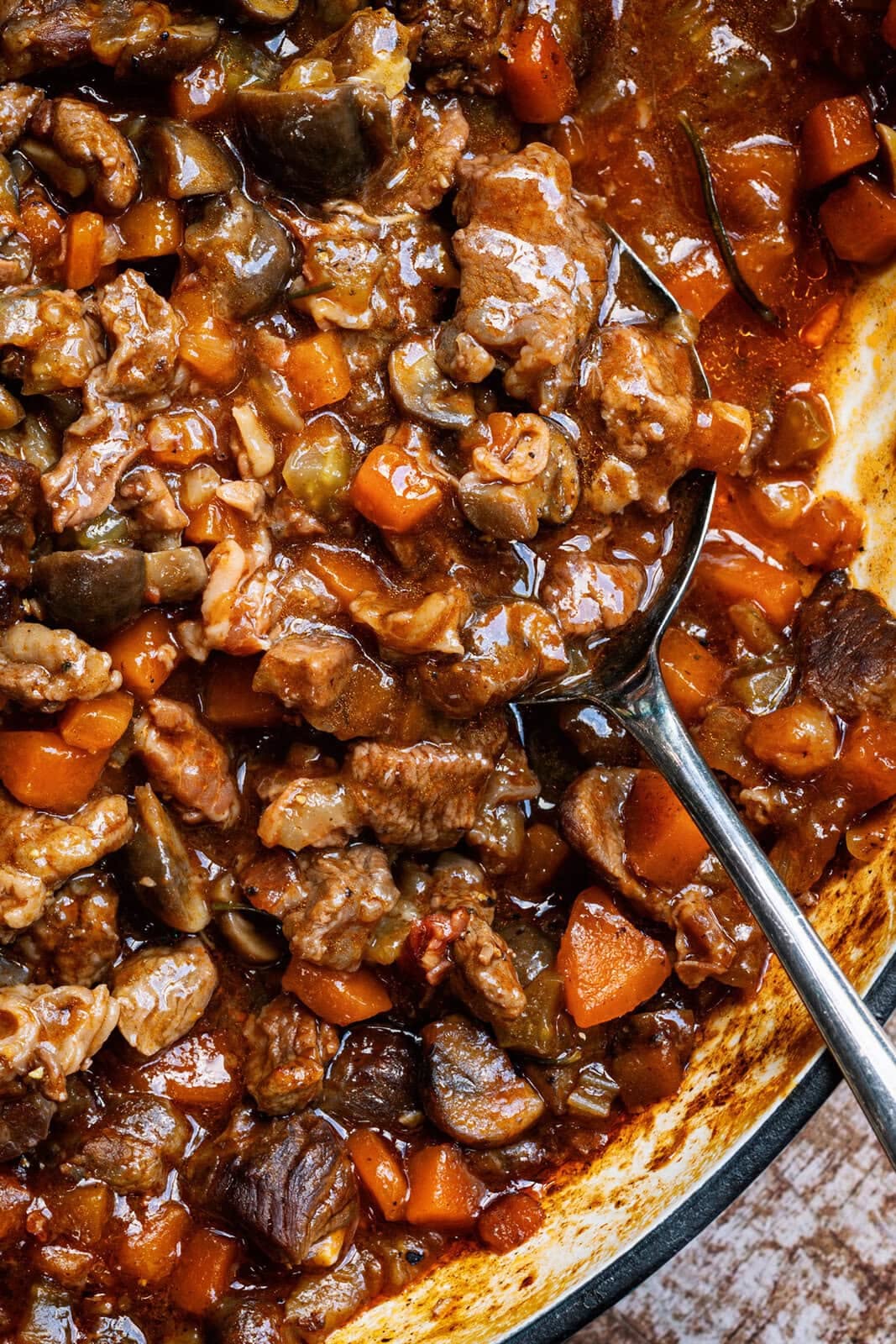
Beef Stew In Pot delivers fork-tender chuck and root vegetables in a rich, glossy gravy you make in one Dutch oven, no searing mess on the stove.
🧂 Ingredients
- 3 lb (1.36 kg) boneless beef chuck roast, cut into 1 1/2-inch cubes
- 2 tsp kosher salt, plus more to taste
- 1 tsp freshly ground black pepper
- 3 tbsp (45 ml) neutral oil, such as canola or grapeseed
- 2 medium yellow onions, cut into 1-inch chunks
- 4 medium carrots, peeled and cut into 2-inch lengths
- 1 lb (454 g) baby Yukon Gold potatoes, halved
- 3 tbsp (24 g) all-purpose flour
- 3 cups (720 ml) low-sodium beef broth
- 2 tbsp (30 g) tomato paste
- 2 dried bay leaves and 1 tsp dried thyme
📋 Instructions
- 1Heat Oven and Dry Beef — Set a rack in the lower third of the oven and preheat to 450F (232C). Pat the cubed chuck completely dry with paper towels, then toss with 2 tsp kosher salt and 1 tsp black pepper.
- 2Sear in Batches — Heat 2 tbsp oil in a 5.5-quart Dutch oven over medium-high until it shimmers, about 2 minutes. Add half the beef in a single layer and sear 2 to 3 minutes per side, about 8 minutes total, until deeply golden brown and it releases on its own. Move to a plate and repeat with the remaining oil and beef.
- 3Soften Onions and Carrots — Pour off all but 2 tbsp fat, lower heat to medium, and add the onions and carrots. Cook 5 to 6 minutes, stirring, until the onions are translucent and the edges pick up color.
- 4Toast Flour and Tomato — Sprinkle the 3 tbsp flour over the vegetables and stir constantly for 60 seconds until it smells toasted and no dry patches remain. Stir in the 2 tbsp tomato paste and cook 1 minute more until it darkens to brick red.
- 5Deglaze and Return Beef — Pour in 1 cup of the beef broth and scrape the browned bits off the bottom with a wooden spoon, which is where most of your flavor lives. Add the remaining broth, the beef and its juices, the bay leaves, and the thyme.
- 6Braise Covered at 300F — Cover and transfer to the oven. Braise at 300F (149C) for 90 minutes, until a cube of beef shreds with light pressure from a fork and reads 200F to 205F (93C to 96C) on an instant-read thermometer.
- 7Add Potatoes and Finish — Stir in the halved baby potatoes, return covered, and bake another 30 minutes at 300F (149C) until a potato pierces easily with a paring knife. Remove the lid and bake 15 minutes more at 425F (218C), until the gravy bubbles at the edges and coats a spoon.
- 8Rest and Serve — Discard the bay leaves, taste, and add salt in 1/4 tsp increments until the gravy tastes full rather than flat. Rest off the heat 10 minutes, then serve in warm bowls with crusty bread.

Tom writes about technology and digital privacy, helping readers protect their data and understand how algorithms shape their online experience. He focuses on practical tools and settings that anyone can adjust.