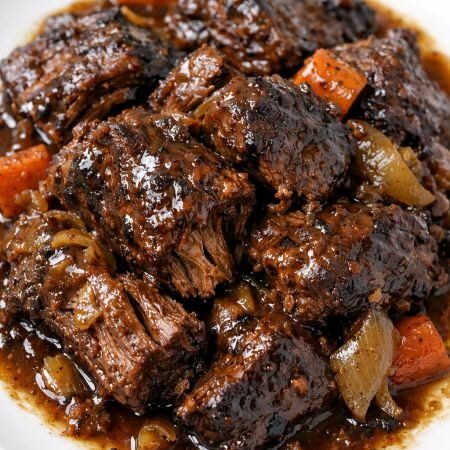
Here's a fact that annoys most home cooks: the difference between bland beef stew and the kind you brag about isn't the beef. It's the sear. Skip it, and you're basically boiling meat in brown water.
Advertisements1
I've made this stew probably 200 times, and I've learned the hard way what to do and what to avoid. What to do: dry the meat, sear it in batches, and deglaze the pan with wine before the liquid goes in. What to avoid: dumping everything in at once and cranking the heat to hurry it along.
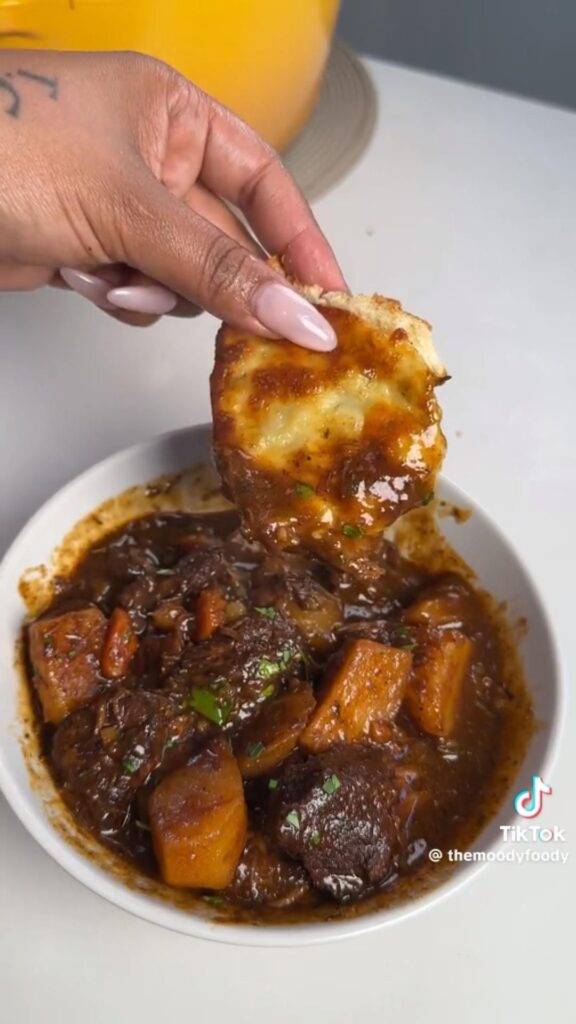
This version gives you a glossy, wine-dark gravy, carrots that hold their shape, and chuck roast that gives way under a spoon. It's a Sunday dish that reheats like a Monday miracle.
Why You'll Love This Recipe
About the Ingredients
3 lb (1.36 kg) beef chuck roast, cut into 1 1/2-inch cubes
Chuck is the right cut because the connective tissue melts into gelatin, which is what makes the gravy silky. If chuck is sold out, boneless short rib or bottom round work, but short rib needs 20 extra minutes of simmering.
2 tsp kosher salt, plus more to taste
Kosher salt seasons more evenly than table salt because the flakes are bigger and easier to pinch. If you only have table salt, use 1 1/2 tsp, since it's denser and saltier by volume.
1 tsp freshly ground black pepper
Fresh-cracked pepper tastes brighter than pre-ground, which goes flat after a few months. No grinder? Buy whole peppercorns and crush them with the bottom of a skillet.
3 tbsp olive oil, divided
You need a high-smoke-point fat for searing, and regular olive oil handles the heat fine. Avocado oil or beef tallow are excellent swaps if you want an even harder sear.
1 large yellow onion, diced (about 1 1/2 cups)
Yellow onion gives the sweetest, deepest base once it caramelizes. Sweet onion works, but red onion turns the gravy an odd pinkish color.
3 garlic cloves, minced
Fresh garlic is non-negotiable here; the jarred stuff tastes metallic after 90 minutes of simmering. If you're out, 1 tsp garlic powder stirred in with the flour is the backup.
3 tbsp all-purpose flour
Flour thickens the stew the old-fashioned way, without cornstarch's glossy, slightly slimy finish. For gluten-free, use 2 tbsp arrowroot starch and add it in the last 10 minutes instead.
2 tbsp tomato paste
Tomato paste adds body and a savory backbone you can't quite identify but would miss. Sun-dried tomato paste is a fine substitute if that's what's in your pantry.
1 cup (240 ml) dry red wine, such as Cabernet Sauvignon
The wine deglazes the pan and adds acidity that cuts through the beef fat. If you avoid alcohol, use 1 cup beef broth plus 1 tbsp red wine vinegar.
4 cups (960 ml) low-sodium beef broth
Low-sodium lets you control the final seasoning, since the stew reduces and concentrates. Chicken broth works in a pinch, but the stew will taste noticeably lighter.
1 lb (450 g) Yukon Gold potatoes, cut into 1-inch chunks
Yukon Golds hold their shape but turn creamy inside, which is exactly what you want. Russets will dissolve and thicken the gravy into something closer to soup.
4 large carrots, cut into 1-inch rounds, plus 2 bay leaves and 1 tsp dried thyme
Carrots go in later than the beef so they don't turn to mush. Parsnips or a handful of frozen pearl onions are great additions if you have them.
Tips & Tricks
- Dry the beef before it hits the pan. Pat every cube with paper towels; wet meat steams instead of sears, and you'll never get that mahogany crust.
- Sear in batches, no exceptions. Crowding the Dutch oven drops the temperature and traps steam, so the beef ends up gray and boiled. Two or three batches takes 12 minutes total.
- Deglaze while the pan is hot. Pour the wine in right after the last batch of beef comes out and scrape the browned bits with a wooden spoon; those bits are the entire flavor of your gravy.
- Add the potatoes and carrots in the last 35 minutes. Any earlier and they'll collapse into the broth before the beef is even tender.
Pro Tips
Step-by-Step Instructions
1. Pat and Season the Beef
Pat the cubed chuck completely dry with paper towels, then toss with 2 tsp kosher salt and 1 tsp black pepper. Let it sit at room temperature for 30 minutes while you chop the vegetables.
2. Sear in Batches
Heat 2 tbsp olive oil in a large Dutch oven over medium-high heat until it shimmers, about 350°F to 375°F (177°C to 190°C). Sear the beef in 3 batches, 3 to 4 minutes per side, until deeply golden brown on all sides; each batch should read 130°F (54°C) at the center. Move the seared beef to a plate.
3. Soften the Aromatics
Add the remaining 1 tbsp oil, then the onion, and cook 5 minutes until translucent and just starting to brown at the edges. Stir in the garlic and cook 30 seconds, until fragrant but not browned.
4. Build the Gravy Base
Sprinkle the flour over the onions and stir constantly for 1 minute to cook out the raw taste. Add the tomato paste and cook 1 minute more, until it darkens to a brick red. Pour in the wine and scrape the bottom of the pot until every brown bit lifts, about 2 minutes.
5. Simmer Low and Slow
Return the beef and any juices to the pot, then add the broth, bay leaves, and thyme. Bring to a bare simmer, 190°F to 200°F (88°C to 93°C), cover, and cook 60 minutes, stirring every 20 minutes.
6. Add the Vegetables
Stir in the potatoes and carrots, cover, and simmer another 35 minutes, until a fork slides into a carrot with no resistance and the beef shreds under light pressure. The liquid should coat the back of a spoon.
7. Finish and Rest
Fish out the bay leaves, taste, and add salt and a splash of red wine vinegar if it tastes flat. Rest off the heat 10 minutes so the gravy thickens, then serve.
Delicious Variations
Guinness Beef Stew
Swap the red wine for 1 cup of stout and cut the broth to 3 1/2 cups for a darker, maltier gravy.
Slow Cooker Version
Sear the beef on the stove, then transfer everything except the potatoes and carrots to a 6-quart slow cooker and cook on low 7 hours; add the vegetables for the last 2 hours.
Instant Pot Beef Stew
Sear using the saute function, add all ingredients except the vegetables, and cook on high pressure 25 minutes with a 10-minute natural release; simmer the vegetables separately and stir them in.
How to Store Beef Stew
Refrigerator
Cool within 2 hours, then store in an airtight container up to 4 days. The flavor peaks on day two.
Freezer
Freeze in portions up to 3 months; leave 1 inch of headspace and thaw overnight in the refrigerator before reheating.
Reheating
Warm gently on the stovetop over medium-low heat, 8 to 10 minutes, stirring occasionally; add a splash of broth if it looks thick.
Frequently Asked Questions
Q: Can I add frozen peas or corn?
Absolutely, stir them in during the last 5 minutes of cooking. They just need to heat through, and any longer turns them mushy.
Make this beef stew this weekend, and do yourself a favor: cook a double batch, because Tuesday-you will be grateful. If you try it, come back and tell me whether you went with wine or the vinegar swap. Stay curious, stay private.
Beef Stew
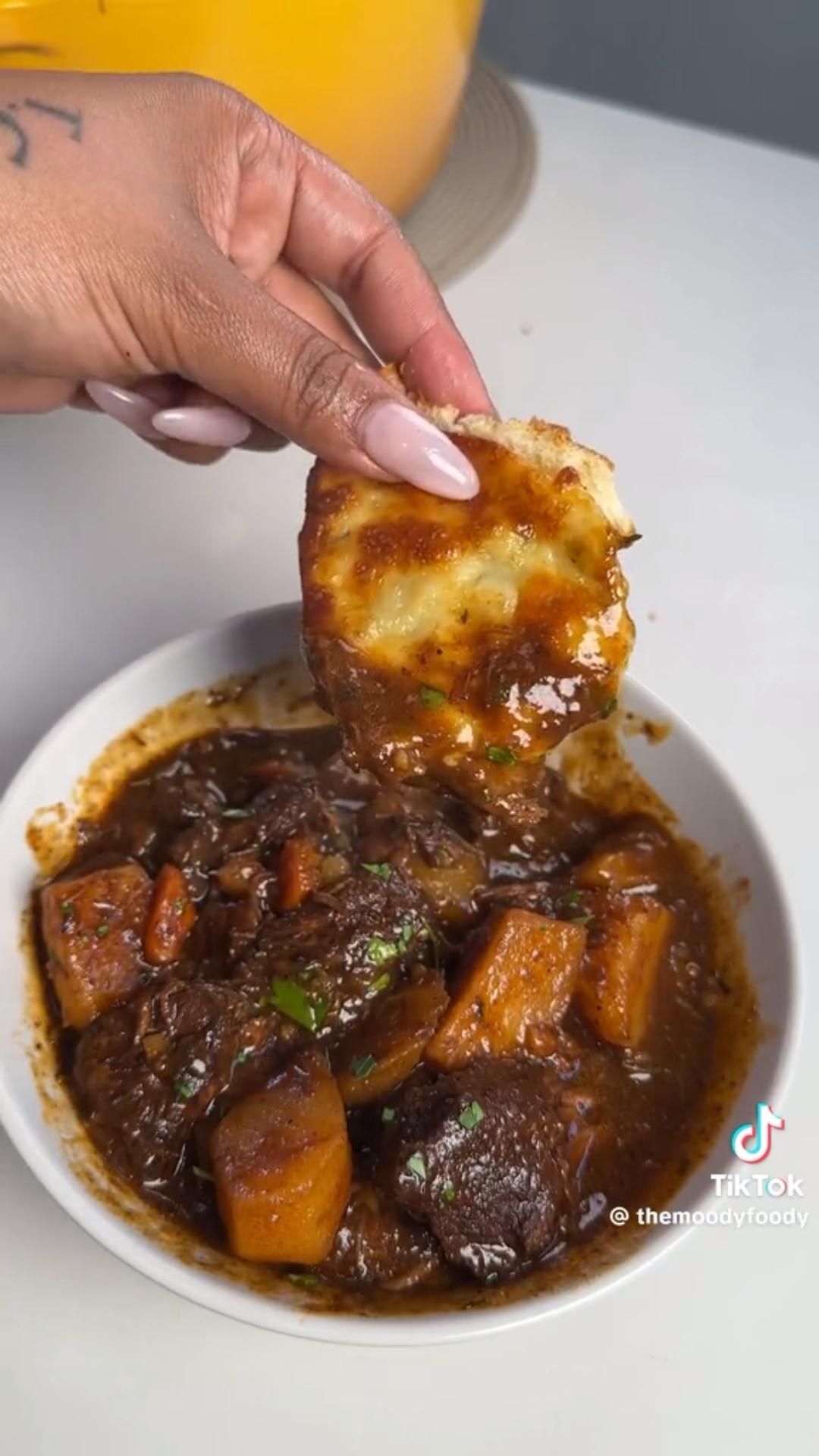
This best beef stew is a rich, one-pot dinner with fork-tender chuck, root vegetables, and a deep red wine gravy your family will request weekly.
🧂 Ingredients
- 3 lb (1.36 kg) beef chuck roast, cut into 1 1/2-inch cubes
- 2 tsp kosher salt, plus more to taste
- 1 tsp freshly ground black pepper
- 3 tbsp olive oil, divided
- 1 large yellow onion, diced (about 1 1/2 cups)
- 3 garlic cloves, minced
- 3 tbsp all-purpose flour
- 2 tbsp tomato paste
- 1 cup (240 ml) dry red wine, such as Cabernet Sauvignon
- 4 cups (960 ml) low-sodium beef broth
- 1 lb (450 g) Yukon Gold potatoes, cut into 1-inch chunks
- 4 large carrots, cut into 1-inch rounds, plus 2 bay leaves and 1 tsp dried thyme
📋 Instructions
- 1Pat and Season the Beef — Pat the cubed chuck completely dry with paper towels, then toss with 2 tsp kosher salt and 1 tsp black pepper. Let it sit at room temperature for 30 minutes while you chop the vegetables.
- 2Sear in Batches — Heat 2 tbsp olive oil in a large Dutch oven over medium-high heat until it shimmers, about 350°F to 375°F (177°C to 190°C). Sear the beef in 3 batches, 3 to 4 minutes per side, until deeply golden brown on all sides; each batch should read 130°F (54°C) at the center. Move the seared beef to a plate.
- 3Soften the Aromatics — Add the remaining 1 tbsp oil, then the onion, and cook 5 minutes until translucent and just starting to brown at the edges. Stir in the garlic and cook 30 seconds, until fragrant but not browned.
- 4Build the Gravy Base — Sprinkle the flour over the onions and stir constantly for 1 minute to cook out the raw taste. Add the tomato paste and cook 1 minute more, until it darkens to a brick red. Pour in the wine and scrape the bottom of the pot until every brown bit lifts, about 2 minutes.
- 5Simmer Low and Slow — Return the beef and any juices to the pot, then add the broth, bay leaves, and thyme. Bring to a bare simmer, 190°F to 200°F (88°C to 93°C), cover, and cook 60 minutes, stirring every 20 minutes.
- 6Add the Vegetables — Stir in the potatoes and carrots, cover, and simmer another 35 minutes, until a fork slides into a carrot with no resistance and the beef shreds under light pressure. The liquid should coat the back of a spoon.
- 7Finish and Rest — Fish out the bay leaves, taste, and add salt and a splash of red wine vinegar if it tastes flat. Rest off the heat 10 minutes so the gravy thickens, then serve.

Tom writes about technology and digital privacy, helping readers protect their data and understand how algorithms shape their online experience. He focuses on practical tools and settings that anyone can adjust.