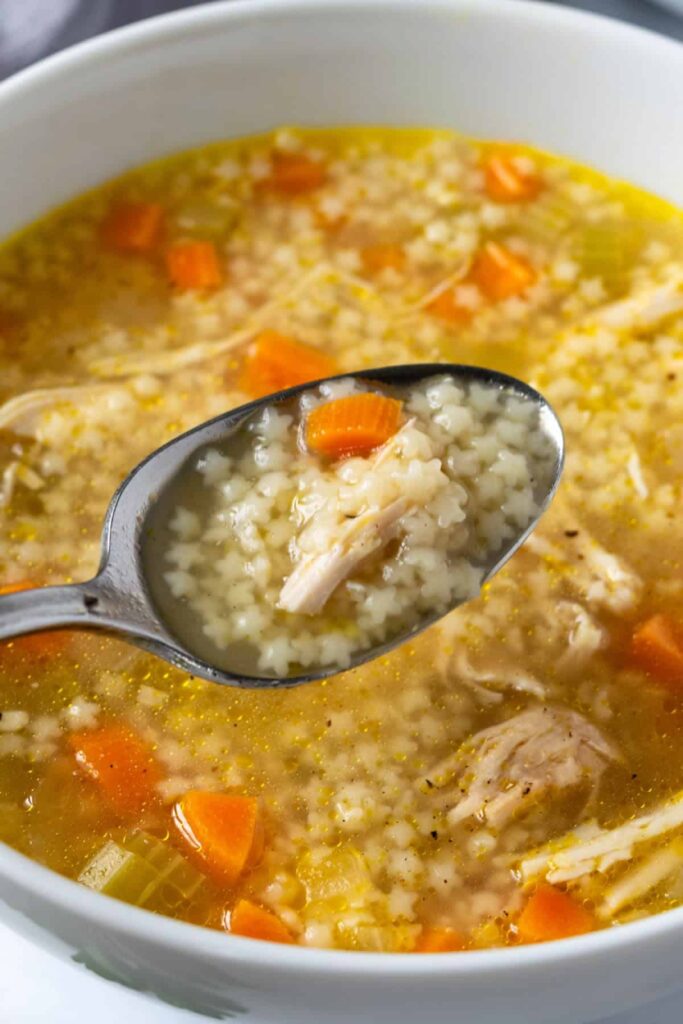
There is a particular hour in late autumn when the light turns the color of weak tea and the kitchen windows fog from the inside. That is the hour this soup was made for. Chicken pastina is not a dish that announces itself; it arrives quietly, a bowl of small golden stars drifting in broth the color of honey, and it asks nothing of you but a spoon.
Advertisements1
The pastina itself is the point. Those tiny grains of pasta, no bigger than a peppercorn, swell in the broth until each one holds a mouthful of chicken flavor. In Italian households the soup was the first solid food a baby ever tasted and the last comfort a grandmother ever asked for, which tells you something about its range. It belongs to everyone at every age.
What follows is the version I make when the weather has turned and someone in the house is tired. It starts with a whole chicken, a pot, and time, and it ends with a soup so soft and warming that you will forget you were ever cold.
Why You'll Love This Recipe
About the Ingredients
1 whole chicken, about 4 lb (1.8 kg), giblets removed
A whole bird gives you both the broth and the shredded meat. If you are short on time, use 3 lb (1.4 kg) bone-in skin-on thighs plus 8 cups (2 L) good store-bought chicken stock.
12 cups (2.8 L) cold water
Cold water draws a clearer, sweeter broth than hot. For a deeper color, swap 2 cups (480 ml) of the water for low-sodium chicken broth.
2 medium yellow onions, peeled and halved
Yellow onions give the roundest sweetness. A leek, white part only, makes a lovely substitute if onions bother your stomach.
3 medium carrots, scrubbed and cut into 2-inch (5 cm) lengths
No need to peel if you scrub well. Parsnips or a small wedge of butternut squash work beautifully in their place.
3 celery stalks with leaves, cut into 2-inch (5 cm) lengths
The leaves are the flavor; do not discard them. Fennel stalks are a fine stand-in for a slightly anise note.
1 dried bay leaf
One is enough; two turns the broth medicinal. Turkish bay is milder than California bay, so buy the former if you can.
1 1/2 tsp fine sea salt, plus more to taste
Add salt in stages, since the broth reduces. Kosher salt works too, but use a scant 2 tsp because the flakes are larger.
1 cup (170 g) pastina, such as stelline, acini di pepe, or orzo
Any tiny shape works, but stelline and acini di pepe stay pleasingly separate. Orzo is larger, so add 1/4 cup (60 ml) extra broth.
1/3 cup (30 g) finely grated Parmigiano-Reggiano, plus more for serving
Freshly grate it; pre-shredded cheese will not melt into the broth. Pecorino Romano gives a sharper, saltier finish.
2 tbsp (30 ml) fresh lemon juice, from about 1/2 lemon
The acid wakes up the whole pot at the end. White wine vinegar, 1 tbsp (15 ml), works in a pinch.
2 tbsp (8 g) chopped fresh flat-leaf parsley, for serving
Flat-leaf has more flavor than curly. Celery leaves or a pinch of fresh dill are good alternatives.
Tips & Tricks
Simmer, Never Boil
A hard boil clouds the broth and toughens the chicken. Keep it at a lazy bubble, around 195F (90C), and skim the gray foam that rises in the first ten minutes.
Cook the Pastina Separately
Boiling the tiny pasta in the pot turns the broth cloudy and gluey within an hour. Cook it in salted water, drain, and add it to each bowl instead.
Salt at the End
The broth reduces as it simmers, so salt added early becomes too much. Season the finished pot, taste, and adjust.
Pro Tips
Step-by-Step Instructions
1. Build the broth
Place the chicken, water, onion, carrot, celery, and bay leaf in a large heavy pot. Bring to a bare simmer over medium heat, about 10 minutes, then reduce the heat so the surface trembles at roughly 195F (90C).
2. Skim and simmer
Skim the gray foam that gathers at the edge for the first 10 minutes, then leave the pot alone for 60 minutes. The chicken is done when the leg wiggles freely and a thermometer in the thickest part of the thigh reads 165F (74C).
3. Rest the bird
Lift the chicken out with tongs or a sling of twine and set it on a plate for 20 minutes. Resting keeps the meat moist and lets you handle it without burning your fingers.
4. Strain the broth
Pour the broth through a fine-mesh sieve into a second pot, pressing the vegetables gently to release their liquid, then discard the solids. You should have about 10 cups (2.4 L).
5. Shred the meat
Pull the chicken from the bones, discarding skin and cartilage, and shred it into bite-size pieces with two forks. You will get roughly 4 cups (about 500 g) of meat.
6. Cook the pastina
Bring a separate pot of well-salted water to a rolling boil, 212F (100C), and cook the pastina until just al dente, 5 to 7 minutes depending on the shape. Drain and toss with a few drops of olive oil so it does not clump.
7. Finish the soup
Return the shredded chicken to the strained broth and warm through over medium-low heat, about 5 minutes. Stir in the lemon juice and taste for salt; it should be bright, not flat.
8. Serve
Spoon a generous mound of pastina into each warm bowl, ladle the hot broth and chicken over it, and shower with Parmigiano-Reggiano and parsley. Serve immediately, while the pasta still has a little bite.
Delicious Variations
Lemon-Dill Pastina
Swap the parsley for fresh dill and double the lemon juice for a Greek-leaning, brighter bowl.
Ginger-Garlic Pastina
Add a 2-inch (5 cm) knob of sliced ginger and 4 smashed garlic cloves to the broth, then finish with scallions instead of parsley.
Vegetable Pastina
Replace the chicken with 8 cups (2 L) vegetable stock, add 1 cup (150 g) frozen peas at the end, and stir in a beaten egg for a stracciatella effect.
How to Store Chicken Pastina Soup
Refrigerator
Store broth, chicken, and pastina in separate containers for up to 4 days. Combined, the pasta will drink the broth and turn soft by the next morning.
Freezer
Freeze the broth and chicken together for up to 3 months in a freezer-safe container, leaving 1 inch (2.5 cm) of headspace. Never freeze the cooked pastina; it turns to paste.
Reheating
Warm the broth and chicken gently on the stovetop over medium-low heat until steaming, about 5 minutes, then add freshly cooked pastina. In the microwave, heat in 1-minute bursts at full power, stirring between each.
Frequently Asked Questions
Q: What is pastina, exactly?
Pastina is any tiny pasta shape, usually made from durum wheat semolina, sold as stelline (little stars), acini di pepe (peppercorns), or farfalline. It is designed to cook in minutes and to be small enough for a spoon, which is why it is the classic first pasta for Italian babies.
Q: Can I use a rotisserie chicken instead of a whole bird?
Yes, and it cuts the cooking time to about 20 minutes. Use 8 cups (2 L) of good chicken stock, simmer the aromatics in it for 20 minutes, then stir in 4 cups (500 g) of shredded rotisserie meat at the end so it does not overcook.
Q: Why did my pastina soup turn thick and gluey?
The pasta released its starch into the broth, which happens whenever pastina sits in the pot. Cook the pastina separately in salted water and add it to each bowl at serving time, and the broth will stay clear and light.
Q: Is chicken pastina soup good for a sick person?
It is one of the gentlest things you can serve someone who is unwell, because the broth is hydrating and the pastina is soft and easy to swallow. Keep the seasoning mild, skip the lemon if it stings a sore throat, and serve it warm rather than hot.
Q: How do I make this soup gluten-free?
Use a gluten-free pastina or small rice-shaped pasta, and check that your broth and Parmigiano-Reggiano are certified gluten-free. Cook the pasta in its own pot, as always, and the rest of the recipe needs no changes.
Make a pot this week, when the light goes soft and the evening arrives early. Ladle it into your warmest bowls, sit down, and let the small golden stars do their quiet work. Wander slowly.
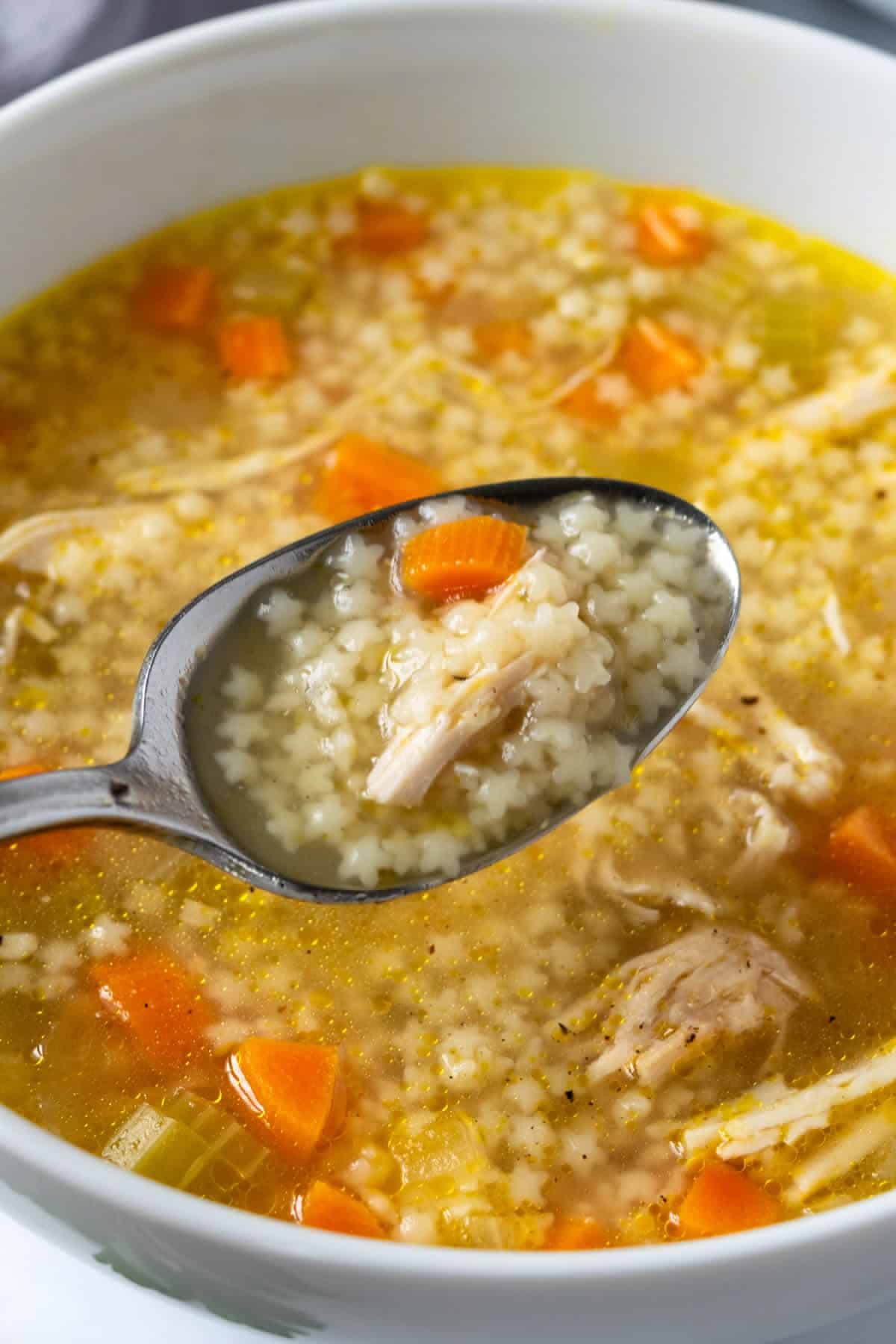
Chicken Pastina Soup
Chicken Pastina Soup is a silky, golden bowl of tiny pasta simmered in rich homemade broth, ready in 50 minutes and gentle enough for any appetite.
🧂 Ingredients
- 1 whole chicken, about 4 lb (1.8 kg), giblets removed
- 12 cups (2.8 L) cold water
- 2 medium yellow onions, peeled and halved
- 3 medium carrots, scrubbed and cut into 2-inch (5 cm) lengths
- 3 celery stalks with leaves, cut into 2-inch (5 cm) lengths
- 1 dried bay leaf
- 1 1/2 tsp fine sea salt, plus more to taste
- 1 cup (170 g) pastina, such as stelline, acini di pepe, or orzo
- 1/3 cup (30 g) finely grated Parmigiano-Reggiano, plus more for serving
- 2 tbsp (30 ml) fresh lemon juice, from about 1/2 lemon
- 2 tbsp (8 g) chopped fresh flat-leaf parsley, for serving
📋 Instructions
- 1Build the broth — Place the chicken, water, onion, carrot, celery, and bay leaf in a large heavy pot. Bring to a bare simmer over medium heat, about 10 minutes, then reduce the heat so the surface trembles at roughly 195F (90C).
- 2Skim and simmer — Skim the gray foam that gathers at the edge for the first 10 minutes, then leave the pot alone for 60 minutes. The chicken is done when the leg wiggles freely and a thermometer in the thickest part of the thigh reads 165F (74C).
- 3Rest the bird — Lift the chicken out with tongs or a sling of twine and set it on a plate for 20 minutes. Resting keeps the meat moist and lets you handle it without burning your fingers.
- 4Strain the broth — Pour the broth through a fine-mesh sieve into a second pot, pressing the vegetables gently to release their liquid, then discard the solids. You should have about 10 cups (2.4 L).
- 5Shred the meat — Pull the chicken from the bones, discarding skin and cartilage, and shred it into bite-size pieces with two forks. You will get roughly 4 cups (about 500 g) of meat.
- 6Cook the pastina — Bring a separate pot of well-salted water to a rolling boil, 212F (100C), and cook the pastina until just al dente, 5 to 7 minutes depending on the shape. Drain and toss with a few drops of olive oil so it does not clump.
- 7Finish the soup — Return the shredded chicken to the strained broth and warm through over medium-low heat, about 5 minutes. Stir in the lemon juice and taste for salt; it should be bright, not flat.
- 8Serve — Spoon a generous mound of pastina into each warm bowl, ladle the hot broth and chicken over it, and shower with Parmigiano-Reggiano and parsley. Serve immediately, while the pasta still has a little bite.

Ingrid explores slow travel and cultural immersion, favoring off-season destinations and local experiences. She writes about the logistics of long-term stays and how to connect with communities without being a tourist. Her angle is about depth over distance.