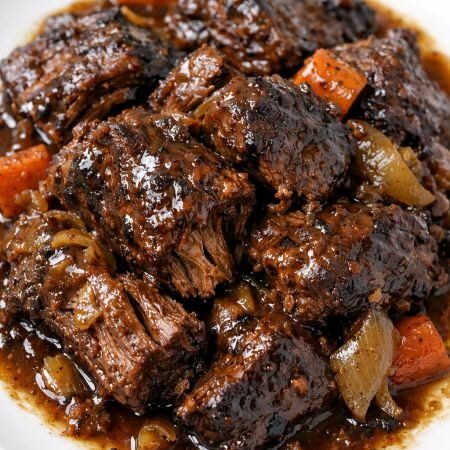
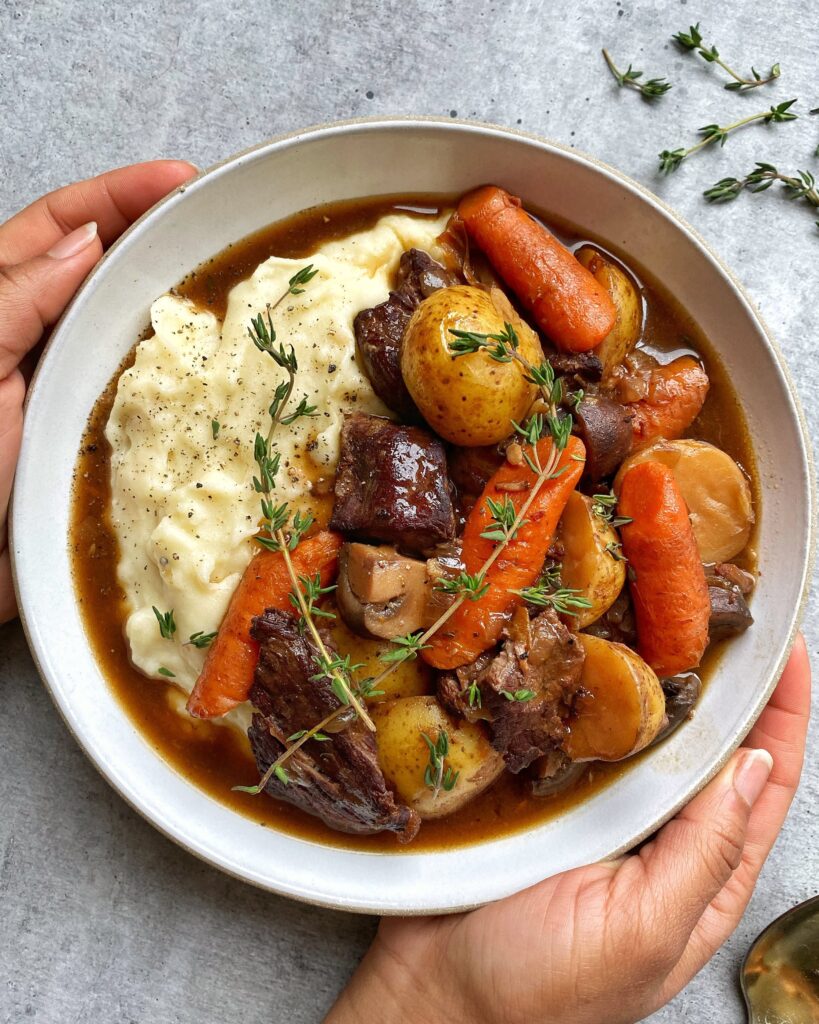
There is something about walking in the door at 5 p.m. and smelling beef and onions that have been quietly doing their thing all afternoon. If your week has been loud and your people are hungry, this Good Eats Pot Roast is the answer you have been looking for.
Advertisements1
You do not need fancy equipment or a culinary degree here. You need a heavy pot, a chuck roast, a pile of onions, and a little patience while the oven does the heavy lifting. That is genuinely it.
And if you are feeding a picky child who claims to hate gravy, I hear you. Serve the meat plain with a little of the pan juices on the side, keep the carrots whole so they are easy to spot and remove, and let them come around on their own timeline. You're doing better than you think.
Why You'll Love This Recipe
About the Ingredients
1 (3.5 to 4 lb / 1.6 to 1.8 kg) boneless beef chuck roast
Chuck is the right cut because its heavy marbling melts into the gravy during a long braise. If chuck is sold out, a 3.5 lb boneless short rib or a 3 lb bottom round roast will work, though round comes out slightly less silky.
2 teaspoons kosher salt, plus more for the vegetables
Kosher salt crystals are larger than table salt, so if you only have fine table salt, use about 1 1/2 teaspoons. Season the meat the night before if you can, it makes a noticeable difference.
1 teaspoon freshly ground black pepper
Fresh-cracked pepper tastes brighter than pre-ground. A cheap coffee grinder reserved for spices gives you the freshest pepper for almost no money.
2 tablespoons neutral oil, such as canola or grapeseed
You need a high-smoke-point oil so it does not burn during the sear. Avocado oil works beautifully, and bacon fat is a delicious swap if you happen to have some.
3 large yellow onions (about 1.5 lb / 680 g), thinly sliced
Yellow onions give the sweetest, deepest gravy. Sweet Vidalia onions are a fine substitute in summer, but skip red onions here because they turn the sauce an unappealing purple.
4 medium carrots (about 10 oz / 285 g), peeled and cut into 2-inch lengths
Look for carrots that are firm and snap when you bend them, not rubbery. Parsnips or small Yukon gold potatoes can stand in for some or all of the carrots.
6 garlic cloves, smashed and peeled
Smashed cloves release flavor without burning the way minced garlic does over long cooking. Jarred garlic is a last resort, use 1 heaping tablespoon.
2 tablespoons tomato paste
Tomato paste adds body and a savory depth you cannot get from stock alone. If you are out, a tablespoon of Worcestershire sauce plus a teaspoon of sugar is a decent stand-in.
2 tablespoons all-purpose flour
Flour thickens the braising liquid into a proper gravy. For a gluten-free version, use 1 tablespoon cornstarch whisked with 2 tablespoons cold water at the very end instead.
2 cups (480 ml) low-sodium beef broth
Low-sodium matters because the liquid reduces for three hours and concentrates. Chicken broth works in a pinch, and a cup of dry red wine swapped for a cup of broth adds lovely acidity.
2 dried bay leaves and 4 sprigs fresh thyme
Dried bay is stronger than fresh, so two leaves is plenty. If you have no thyme, a teaspoon of dried oregano tied in cheesecloth does the job.
Tips & Tricks
Do Not Skip the Sear
Browning the roast in a hot pan builds the flavor base for the entire gravy, so give it a full 4 to 5 minutes per side and resist the urge to peek.
Keep the Liquid Low
The broth should come only about halfway up the meat, not cover it. Too much liquid steams the roast instead of braising it, and the gravy ends up thin.
Let It Rest Before Slicing
Pull the roast out and wait 15 minutes before cutting. This lets the juices redistribute so the meat stays moist instead of running out onto the board.
Taste Before You Thicken
Adjust salt after reducing the gravy, not before. The liquid gets saltier as it cooks down, and you cannot take salt back out.
Pro Tips
Step-by-Step Instructions
1. Dry and Season
Pat the roast completely dry with paper towels, then season all over with the 2 teaspoons kosher salt and the black pepper. Dry meat browns; wet meat steams, so this 2-minute step is doing real work.
2. Sear the Roast
Heat the oil in a Dutch oven over medium-high heat until it shimmers, about 375 F to 400 F (190 C to 204 C). Add the roast and sear 4 to 5 minutes per side until deeply golden brown on all surfaces, then move it to a plate.
3. Soften the Onions
Lower the heat to medium, add the onions and a pinch of salt, and cook 10 to 12 minutes, stirring occasionally, until soft, translucent, and just starting to turn golden at the edges.
4. Bloom the Paste
Stir in the garlic, tomato paste, and flour and cook 60 to 90 seconds until the paste darkens to a brick red and smells sweet rather than raw. This step removes the chalky flour taste before any liquid goes in.
5. Deglaze and Build
Pour in the broth and scrape the browned bits off the bottom with a wooden spoon. Add the bay leaves and thyme, then nestle the roast back in with the carrots. The liquid should reach about halfway up the meat, add a splash more broth if needed.
6. Braise Low and Slow
Cover and transfer to a 325 F (163 C) oven for 2 hours 45 minutes to 3 hours. The roast is done when a fork twists easily in the center with no resistance and the meat registers 200 F to 205 F (93 C to 96 C) on an instant-read thermometer.
7. Rest the Meat
Move the roast to a cutting board and tent it loosely with foil for 15 minutes. Meanwhile, discard the bay leaves and thyme stems and skim any visible fat from the surface of the gravy.
8. Finish the Gravy
Set the pot over medium heat and simmer the onions and juices 5 to 8 minutes until the gravy coats the back of a spoon, with bubbles breaking gently at the edges. Taste and add salt only if it needs it.
9. Shred and Serve
Pull the roast apart with two forks into large chunks, return it to the pot with the carrots, and spoon the onions and gravy over the top. Serve over mashed potatoes, egg noodles, or thick slices of buttered toast.
Delicious Variations
Mushroom Red Wine Pot Roast
Swap 1 cup of the broth for dry red wine and add 8 oz sliced cremini mushrooms with the onions for a deeper, more grown-up gravy.
Mississippi Style
Add a stick of butter, a packet of dry ranch seasoning, and 6 pepperoncini with their juice, then shred the meat and serve it on toasted rolls.
Asian Braised Pot Roast
Replace the broth with 1 1/2 cups beef broth plus 1/2 cup soy sauce, add 2 inches of ginger and 2 star anise, and finish with a drizzle of toasted sesame oil.
How to Store Good Eats Pot Roast
Refrigerator
Store the cooled roast, vegetables, and gravy together in an airtight container for up to 4 days. The flavor actually improves on day two, so do not rush it.
Freezer
Freeze in portion-sized containers with the gravy for up to 3 months, leaving 1 inch of headspace. Thaw overnight in the refrigerator before reheating.
Reheating
Warm gently in a covered pot over medium-low heat with a splash of broth, about 10 minutes, until steaming. Avoid the microwave on high, which toughens the meat.
Frequently Asked Questions
Q: What is the best cut of beef for pot roast?
Chuck roast is the best cut because its marbling and connective tissue break down into gelatin during a long braise. Bottom round and brisket also work, but they come out a bit drier, so keep an eye on the internal temperature.
Q: Why did my pot roast turn out dry and tough?
It almost certainly needed more time, not less, because undercooked chuck is chewy while overcooked chuck is tender. Return it to the 325 F (163 C) oven in 30-minute increments until a fork twists easily in the center.
Q: Can I make pot roast in a slow cooker instead of the oven?
Yes, sear the meat and soften the onions on the stove first, then cook everything on low for 8 to 9 hours or high for 4 to 5 hours. The sear is what gives you the deep gravy flavor, so do not skip it even though it feels like extra work.
Q: How much liquid should I use so the roast does not dry out?
Use just enough broth to come about halfway up the sides of the roast, roughly 2 cups for a 3.5 to 4 lb roast. More than that and you are boiling the meat rather than braising it, which dilutes the gravy.
Q: Can I add potatoes to the pot?
Yes, add 1 1/2 lb of halved baby Yukon gold potatoes during the last 90 minutes of cooking so they hold their shape. Russets tend to dissolve and turn the gravy cloudy, so waxy potatoes are the better choice.
Pick up a chuck roast this week, set aside an afternoon, and let your oven do the work while you do literally anything else. Serve it over mashed potatoes with plenty of that onion gravy, and watch the table go quiet in the best possible way. You're doing better than you think.
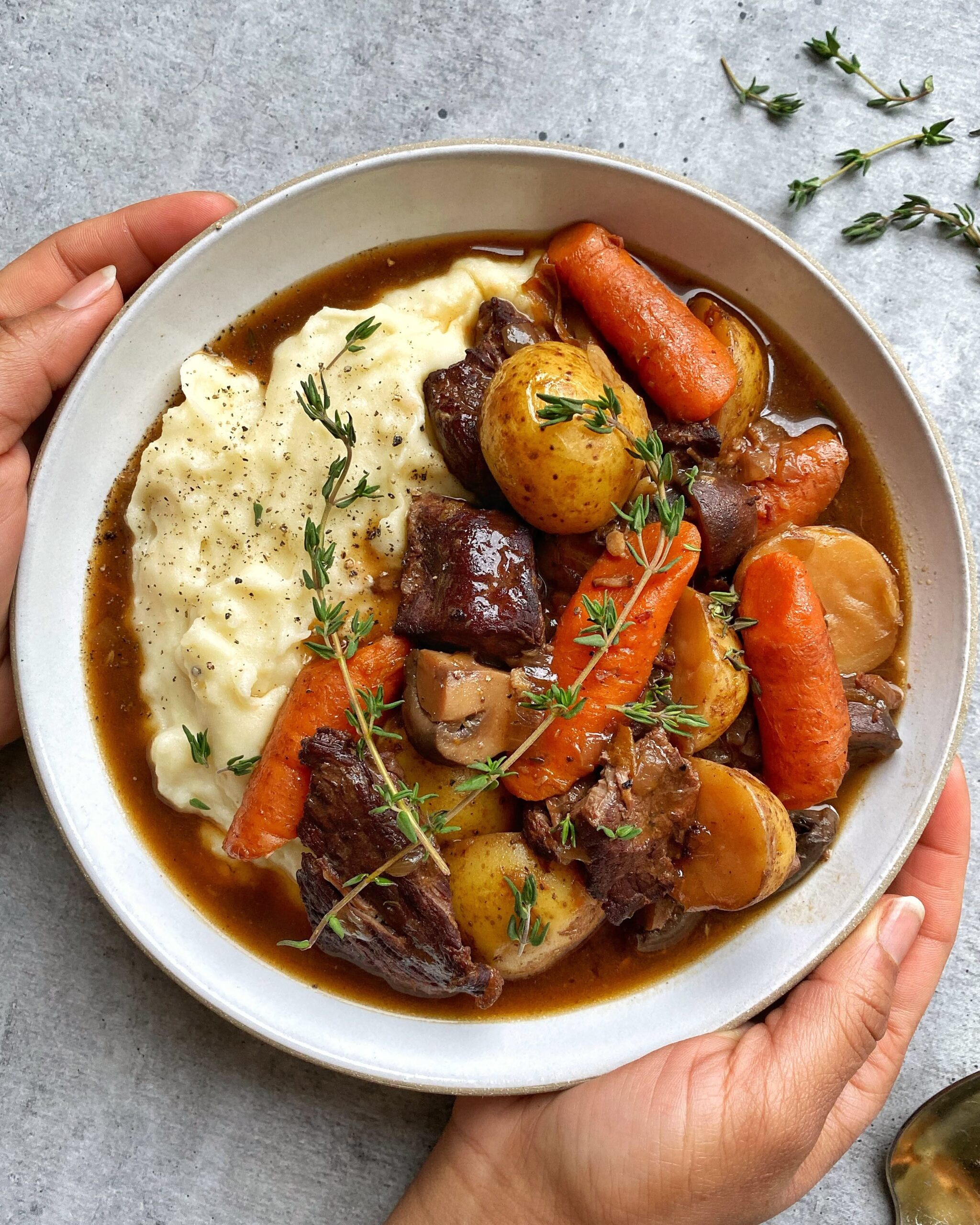
Good Eats Pot Roast
Good Eats Pot Roast delivers fork-tender beef in a rich onion gravy, one pot, minimal fuss, and a dinner that makes any weeknight feel like Sunday.
🧂 Ingredients
- 1 (3.5 to 4 lb / 1.6 to 1.8 kg) boneless beef chuck roast
- 2 teaspoons kosher salt, plus more for the vegetables
- 1 teaspoon freshly ground black pepper
- 2 tablespoons neutral oil, such as canola or grapeseed
- 3 large yellow onions (about 1.5 lb / 680 g), thinly sliced
- 4 medium carrots (about 10 oz / 285 g), peeled and cut into 2-inch lengths
- 6 garlic cloves, smashed and peeled
- 2 tablespoons tomato paste
- 2 tablespoons all-purpose flour
- 2 cups (480 ml) low-sodium beef broth
- 2 dried bay leaves and 4 sprigs fresh thyme
📋 Instructions
- 1Dry and Season — Pat the roast completely dry with paper towels, then season all over with the 2 teaspoons kosher salt and the black pepper. Dry meat browns; wet meat steams, so this 2-minute step is doing real work.
- 2Sear the Roast — Heat the oil in a Dutch oven over medium-high heat until it shimmers, about 375 F to 400 F (190 C to 204 C). Add the roast and sear 4 to 5 minutes per side until deeply golden brown on all surfaces, then move it to a plate.
- 3Soften the Onions — Lower the heat to medium, add the onions and a pinch of salt, and cook 10 to 12 minutes, stirring occasionally, until soft, translucent, and just starting to turn golden at the edges.
- 4Bloom the Paste — Stir in the garlic, tomato paste, and flour and cook 60 to 90 seconds until the paste darkens to a brick red and smells sweet rather than raw. This step removes the chalky flour taste before any liquid goes in.
- 5Deglaze and Build — Pour in the broth and scrape the browned bits off the bottom with a wooden spoon. Add the bay leaves and thyme, then nestle the roast back in with the carrots. The liquid should reach about halfway up the meat, add a splash more broth if needed.
- 6Braise Low and Slow — Cover and transfer to a 325 F (163 C) oven for 2 hours 45 minutes to 3 hours. The roast is done when a fork twists easily in the center with no resistance and the meat registers 200 F to 205 F (93 C to 96 C) on an instant-read thermometer.
- 7Rest the Meat — Move the roast to a cutting board and tent it loosely with foil for 15 minutes. Meanwhile, discard the bay leaves and thyme stems and skim any visible fat from the surface of the gravy.
- 8Finish the Gravy — Set the pot over medium heat and simmer the onions and juices 5 to 8 minutes until the gravy coats the back of a spoon, with bubbles breaking gently at the edges. Taste and add salt only if it needs it.
- 9Shred and Serve — Pull the roast apart with two forks into large chunks, return it to the pot with the carrots, and spoon the onions and gravy over the top. Serve over mashed potatoes, egg noodles, or thick slices of buttered toast.

Amara writes about parenting and child development with a focus on neurodivergent kids. She shares strategies for managing sensory meltdowns, building routines, and advocating in schools. Her perspective is that every child’s brain works differently, and that’s okay.