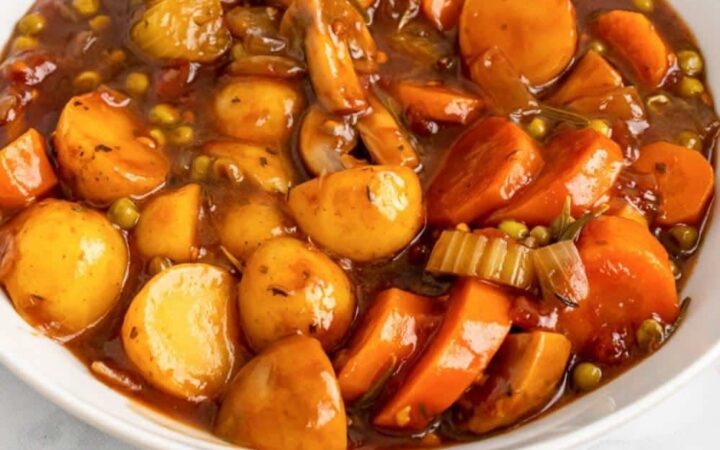

There is a particular hour on a January afternoon when the light goes thin and blue, and the only sensible answer is a heavy pot on a low flame. Soup and stew, in my kitchen, are not two dishes but one idea stretched across a spectrum: broth that whispers at one end, a spoon that stands up at the other. This recipe sits comfortably in the middle, thick enough to mound over buttered bread, loose enough to call for a second bowl.
Advertisements1
The word stew comes from the old French estuver, to steam in a closed vessel, and every culture that has ever owned a pot has answered the same question with it. The French have their daube, the Irish their stobhach, the Hungarians their gulyás, and my grandmother had a blue enameled Dutch oven that never quite came clean. What they share is patience and a cheap cut of meat that rewards it.
I built this version around chuck and a handful of roots because that is what the market gives me in deep winter. It asks for very little attention once the lid goes on, which is the whole point. You can read a book, or watch the snow, or do nothing at all.
Why You'll Love This Recipe
About the Ingredients
3 lb (1.4 kg) boneless beef chuck, cut into 1 1/2-inch cubes
Chuck is the ideal braising cut because its heavy marbling melts into the sauce. If chuck is unavailable, beef short rib or brisket flat work beautifully, though brisket needs about 20 extra minutes.
2 tbsp (30 ml) neutral oil, such as grapeseed or canola
A high-smoke-point oil lets you sear hard without bitterness. Olive oil works in a pinch, but keep the heat at medium-high so it does not scorch.
2 large yellow onions, roughly chopped (about 3 cups)
Yellow onions give the sweetest, deepest base after browning. Sweet Vidalia onions will make the finished stew noticeably sweeter, so reduce the honey or sugar by half if you use them.
4 medium carrots, peeled and cut into 1-inch rounds
Look for carrots that snap rather than bend; floppy ones have lost their sugar. Parsnips or golden beets substitute well and add an earthier note.
1 lb (450 g) Yukon Gold potatoes, cut into 1 1/2-inch chunks
Waxy Yukon Golds hold their shape through a long braise. Russets will break down and thicken the broth instead, which is fine if you want a more soup-like body.
3 tbsp (45 g) tomato paste
Tomato paste adds glutamates and a faint sweetness that rounds out the beef. If you only have ketchup, use 1/4 cup and skip the honey in the recipe.
1/4 cup (30 g) all-purpose flour
Flour thickens the sauce as it cooks into the fond. For a gluten-free version, use 2 tbsp cornstarch whisked into the cold broth instead of dusting the meat.
4 cups (960 ml) low-sodium beef broth
Low-sodium lets you control the final seasoning. Homemade stock is best; if using water plus bouillon, taste before adding any salt at the end.
1 cup (240 ml) dry red wine, such as Côtes du Rhône or Malbec
The wine's acidity cuts the richness and its tannins add structure. Substitute 1 cup broth plus 1 tbsp red wine vinegar if you prefer to cook without alcohol.
2 dried bay leaves and 1 tsp (2 g) dried thyme
Bay and thyme are the classic braise pair; fresh thyme is even better at 4 sprigs. Avoid dried rosemary here, which turns medicinal over a long simmer.
1 tbsp (15 ml) Worcestershire sauce and 1 tsp (6 g) kosher salt
Worcestershire deepens the savory backbone. Tamari or coconut aminos make a good soy-free, gluten-free stand-in.
1 cup (150 g) frozen peas, stirred in at the end
Frozen peas are sweeter than fresh out of season and need only residual heat. Chopped green beans or corn can stand in, added 5 minutes earlier.
Tips & Tricks
- Do not crowd the pot when searing. Brown the beef in three batches so each cube gets a dry, hot surface; a crowded pot steams the meat gray and you lose the fond that makes the sauce taste deep.
- Deglaze with the wine while the pan is still hot. Scrape every brown speck from the bottom with a wooden spoon; those bits are concentrated flavor, and skipping this step leaves the stew tasting flat.
- Salt at the end, not the beginning. The broth reduces by nearly a third, so early salting concentrates into something briny; wait until the beef is tender, then adjust.
- Let it rest off the heat for 10 minutes before serving. The sauce thickens slightly as it cools and the meat reabsorbs juices instead of bleeding them into the bowl.
Pro Tips
Step-by-Step Instructions
1. Dry and Season the Beef
Pat the chuck cubes bone-dry with paper towels and toss them with 1 tsp kosher salt and several grinds of black pepper. Let them sit at room temperature for 15 minutes while you chop the vegetables; cold meat sears unevenly and steams in the pan.
2. Sear in Batches
Heat 1 tbsp oil in a heavy Dutch oven over medium-high heat until it shimmers, about 2 minutes. Sear the beef in three batches, 3 to 4 minutes per side, until deeply browned on all faces, then transfer to a plate. The cubes should read 130°F to 140°F (54°C to 60°C) at this stage; they will finish cooking in the braise.
3. Soften the Aromatics
Lower the heat to medium, add the remaining oil, and cook the onions for 6 to 8 minutes until translucent and just golden at the edges. Add the tomato paste and cook 2 minutes more, stirring constantly, until it darkens to a brick red and smells sweet rather than raw.
4. Bloom the Flour and Deglaze
Sprinkle the flour over the onions and stir for 1 minute to coat. Pour in the wine and scrape the bottom of the pot firmly with a wooden spoon for 2 minutes, until the liquid reduces by half and no brown bits remain stuck to the base.
5. Build the Braise
Return the beef and any collected juices to the pot, then add the broth, Worcestershire sauce, bay leaves, and thyme. Bring to a bare simmer, cover, and cook at 300°F (150°C) for 1 hour 15 minutes; the surface should tremble gently, never boil hard.
6. Add the Roots
Stir in the carrots and potatoes, re-cover, and continue cooking at 300°F (150°C) for 45 to 55 minutes, until a potato yields easily to a paring knife and the beef shreds under light pressure from a fork. The internal temperature of the meat should reach 200°F to 205°F (93°C to 96°C) for proper collagen breakdown.
7. Finish and Rest
Discard the bay leaves, stir in the frozen peas, and let the pot stand off the heat for 10 minutes. Taste and adjust with salt and a few drops of red wine vinegar if the sauce feels heavy. The stew should look glossy and coat the back of a spoon.
8. Serve
Ladle into deep bowls, making sure each portion gets its share of beef and roots, and spoon a little extra sauce over the top. Serve with buttered crusty bread or a spoonful of sour cream swirled in at the table.
Delicious Variations
Smoky Paprika Version
Stir 2 tsp smoked paprika and 1/2 tsp cayenne into the onions with the tomato paste for a Hungarian-leaning gulyás feel.
Mushroom and Barley
Replace half the beef with 1 lb cremini mushrooms and add 3/4 cup pearl barley with the broth, extending the simmer by 20 minutes.
Herb-Forward Spring Stew
Swap the roots for 2 cups baby turnips, 2 cups fennel, and a handful of chopped dill stirred in at the end for a lighter, greener pot.
How to Store Soup And Stew
Refrigerator
Cool within 2 hours and store in an airtight container for up to 4 days. The fat will solidify on top; leave it there until reheating, then stir it back in for flavor.
Freezer
Freeze in portioned containers for up to 3 months, leaving 1 inch of headspace. Potatoes soften slightly on thawing, so consider omitting them if you plan to freeze the whole batch.
Reheating
Reheat gently on the stovetop over medium-low heat for 8 to 10 minutes, stirring occasionally, until it reaches 165°F (74°C). Add a splash of broth or water if the sauce has thickened too much.
Frequently Asked Questions
Q: What is the difference between soup and stew?
Stew uses less liquid and simmers longer, so it is served in a bowl and eaten with a spoon that meets resistance, while soup is brothier and thinner. This recipe sits in the middle: thick enough to mound over bread, loose enough to sip.
Q: What cut of beef is best for stew?
Boneless chuck is the best choice because its heavy marbling and connective tissue break down into a glossy, rich sauce after about two hours. Short rib, brisket, and round also work, though round can turn dry if simmered too long.
Q: Can I make this soup and stew in a slow cooker?
Yes, brown the beef and soften the onions on the stovetop first, then transfer everything except the peas to a slow cooker and cook on low for 7 to 8 hours. Add the peas in the last 10 minutes and season at the end.
Q: Why is my stew tough instead of tender?
It almost always needs more time, not more heat, because collagen needs a long, gentle simmer at 200°F to 205°F (93°C to 96°C) to melt into gelatin. Keep the pot at a bare tremble and check again in 30-minute increments.
Q: How do I thicken stew if it is too thin?
Whisk 1 tbsp cornstarch into 2 tbsp cold water and stir it into the simmering pot, then cook 3 minutes until glossy. Alternatively, mash a few of the potato chunks against the side of the pot for a more rustic body.
Make this pot on the coldest evening you can find, and let the kitchen fill with the smell of wine and thyme while the windows fog. Then tell me how it turned out, and what you changed, because the best version of any stew belongs to the person stirring it. Wander slowly.

Soup And Stew
Soup And Stew is a hearty one-pot braise of beef, root vegetables, and herbs that simmers into deep, warming comfort for cold nights.
🧂 Ingredients
- 3 lb (1.4 kg) boneless beef chuck, cut into 1 1/2-inch cubes
- 2 tbsp (30 ml) neutral oil, such as grapeseed or canola
- 2 large yellow onions, roughly chopped (about 3 cups)
- 4 medium carrots, peeled and cut into 1-inch rounds
- 1 lb (450 g) Yukon Gold potatoes, cut into 1 1/2-inch chunks
- 3 tbsp (45 g) tomato paste
- 1/4 cup (30 g) all-purpose flour
- 4 cups (960 ml) low-sodium beef broth
- 1 cup (240 ml) dry red wine, such as Côtes du Rhône or Malbec
- 2 dried bay leaves and 1 tsp (2 g) dried thyme
- 1 tbsp (15 ml) Worcestershire sauce and 1 tsp (6 g) kosher salt
- 1 cup (150 g) frozen peas, stirred in at the end
📋 Instructions
- 1Dry and Season the Beef — Pat the chuck cubes bone-dry with paper towels and toss them with 1 tsp kosher salt and several grinds of black pepper. Let them sit at room temperature for 15 minutes while you chop the vegetables; cold meat sears unevenly and steams in the pan.
- 2Sear in Batches — Heat 1 tbsp oil in a heavy Dutch oven over medium-high heat until it shimmers, about 2 minutes. Sear the beef in three batches, 3 to 4 minutes per side, until deeply browned on all faces, then transfer to a plate. The cubes should read 130°F to 140°F (54°C to 60°C) at this stage; they will finish cooking in the braise.
- 3Soften the Aromatics — Lower the heat to medium, add the remaining oil, and cook the onions for 6 to 8 minutes until translucent and just golden at the edges. Add the tomato paste and cook 2 minutes more, stirring constantly, until it darkens to a brick red and smells sweet rather than raw.
- 4Bloom the Flour and Deglaze — Sprinkle the flour over the onions and stir for 1 minute to coat. Pour in the wine and scrape the bottom of the pot firmly with a wooden spoon for 2 minutes, until the liquid reduces by half and no brown bits remain stuck to the base.
- 5Build the Braise — Return the beef and any collected juices to the pot, then add the broth, Worcestershire sauce, bay leaves, and thyme. Bring to a bare simmer, cover, and cook at 300°F (150°C) for 1 hour 15 minutes; the surface should tremble gently, never boil hard.
- 6Add the Roots — Stir in the carrots and potatoes, re-cover, and continue cooking at 300°F (150°C) for 45 to 55 minutes, until a potato yields easily to a paring knife and the beef shreds under light pressure from a fork. The internal temperature of the meat should reach 200°F to 205°F (93°C to 96°C) for proper collagen breakdown.
- 7Finish and Rest — Discard the bay leaves, stir in the frozen peas, and let the pot stand off the heat for 10 minutes. Taste and adjust with salt and a few drops of red wine vinegar if the sauce feels heavy. The stew should look glossy and coat the back of a spoon.
- 8Serve — Ladle into deep bowls, making sure each portion gets its share of beef and roots, and spoon a little extra sauce over the top. Serve with buttered crusty bread or a spoonful of sour cream swirled in at the table.

Ingrid explores slow travel and cultural immersion, favoring off-season destinations and local experiences. She writes about the logistics of long-term stays and how to connect with communities without being a tourist. Her angle is about depth over distance.