Pork tenderloin is the quiet aristocrat of the butcher counter: slender, mild, and forgiving, sold for a fraction of what its beef counterpart commands. In the American Midwest, where I learned to cook, it was the cut that appeared whenever a neighbor had something to celebrate, trussed with twine and slid into a hot oven while the kitchen filled with the smell of thyme and rendered fat.
Advertisements1
What makes it worth ten recipes rather than one is its temperament. It has almost no intramuscular fat, which means it takes on whatever you give it, and it overcooks in the space of a few minutes if you look away. So the ten approaches gathered here run from a blistering stovetop sear to a slow braise in cider, each one built around the same principle: high heat to brown, gentle heat to finish, and a long rest before the knife.
Cook them in any order you like. The garlic-herb roast is the one I return to on a Tuesday; the honey mustard is what I bring to a table with children at it; the apple cider version belongs to October, when the orchards are loud with wind.
Why You'll Love This Recipe
About the Ingredients
2 whole pork tenderloins, about 1 lb (450g) each, silver skin trimmed
Look for tenderloins that are uniform in thickness so they cook evenly; if yours taper sharply, fold the thin tail under and tie it. You can substitute a 2 lb (900g) boneless pork loin, but add 10 to 15 minutes of roasting time.
3 tbsp (45ml) olive oil, divided
Regular olive oil is fine here since we are searing at high heat; save the expensive finishing oil for drizzling at the table. Avocado oil works as a neutral, higher-smoke-point swap.
6 garlic cloves, 4 minced and 2 smashed
Fresh garlic gives a sharper bite than the jarred kind, which tastes flat once heated. If you are out, 1 tsp (3g) garlic powder per clove is the closest substitute.
2 tbsp (6g) fresh thyme leaves, plus 4 whole sprigs
Thyme holds up to heat better than basil or parsley. Dried thyme can stand in at 1 tsp (1g), but add it to the oil rather than sprinkling it on top.
1 tbsp (15g) Dijon mustard
Dijon brings tang and helps the rub cling to the meat. Whole-grain mustard is a fine substitute and gives a coarser, more rustic crust.
1 tbsp (15g) honey
Honey balances the mustard and encourages browning; maple syrup is a direct swap with a slightly smokier finish. Warm it briefly if it has crystallized.
1 1/2 tsp (9g) kosher salt
Kosher salt dissolves more slowly and seasons more evenly than table salt. If using fine table salt, reduce to 1 tsp (6g) or the meat will taste briny.
1 tsp (2g) freshly cracked black pepper
Coarse cracks toast in the pan and add texture; pre-ground pepper loses its aromatics within weeks. A pinch of smoked paprika alongside it deepens the color.
1/2 cup (120ml) low-sodium chicken broth
Broth deglazes the pan and becomes the base of the sauce. Dry white wine or apple cider can replace it, though both will need a minute longer to reduce.
2 tbsp (28g) cold unsalted butter, cubed
Cold butter emulsifies the pan sauce and gives it a glossy sheen. Do not use margarine; it separates and turns the sauce greasy.
Tips & Tricks
Do not crowd the pan
Two tenderloins need a 12-inch (30cm) skillet or a sheet pan with space between them, or they will steam instead of sear and never develop that mahogany crust.
Pull it early, always
Pork tenderloin is safe and best at 145F (63C), and it will climb another 5 degrees while resting, so take it out at 140F (60C) and let carryover heat finish the job.
Rest before slicing
A full 5 to 10 minutes under foil lets the juices redistribute; cut into it immediately and you will watch a quarter cup of moisture pool on the board instead of staying in the meat.
Season the day before if you can
A dry salt rub in the refrigerator overnight seasons the interior and slightly firms the surface, which browns faster the next day.
Pro Tips
Step-by-Step Instructions
1. Trim and temper
Pat the tenderloins dry with paper towels, pull away the silvery membrane with a thin knife, and let them sit at room temperature for 15 minutes so they cook evenly from edge to center.
2. Build the rub
Stir together the minced garlic, thyme leaves, Dijon, honey, salt, and pepper into a thick paste, then rub it over every surface of both tenderloins, working it into the crevices.
3. Sear hard
Heat 2 tbsp (30ml) olive oil in a 12-inch (30cm) oven-safe skillet over medium-high until it shimmers, then lay in the tenderloins and sear 3 minutes per side at 400F (205C) equivalent stovetop heat until deeply golden brown on all four sides, about 12 minutes total.
4. Add aromatics
Toss in the smashed garlic cloves and thyme sprigs, spoon the rendered fat over the meat, and transfer the skillet to a 425F (220C) oven.
5. Roast to temperature
Roast 12 to 15 minutes, until an instant-read thermometer inserted at the thickest point reads 140F (60C); the meat should feel springy but not firm when pressed.
6. Rest the meat
Move the tenderloins to a cutting board, tent loosely with foil, and rest 8 minutes while you make the sauce; the internal temperature will rise to about 145F (63C).
7. Deglaze the pan
Set the skillet over medium heat, pour in the broth, and scrape up the browned bits with a wooden spoon, simmering 3 minutes until the liquid reduces by half and the edges bubble steadily.
8. Finish the sauce
Off the heat, whisk in the cold butter one cube at a time until the sauce turns glossy and coats the back of a spoon, then taste and adjust the salt.
9. Slice and serve
Cut the rested pork against the grain into 1/2-inch (1.3cm) coins, shingle them on a platter, and spoon the pan sauce over the top just before it reaches the table.
Delicious Variations
Apple Cider and Sage
Swap the chicken broth for 1/2 cup (120ml) apple cider and add 6 fresh sage leaves to the pan; the sauce reduces to a glossy amber glaze that tastes like late October.
Honey Mustard Sheet Pan
Increase the honey to 3 tbsp (45g) and roast the tenderloin alongside halved Brussels sprouts at 425F (220C) for 20 minutes, so the vegetables catch the drippings.
Chili-Lime Grilled
Replace the Dijon and thyme with 2 tbsp (30ml) lime juice, 1 tsp (2g) chili powder, and 1 tsp (2g) cumin, then grill over medium-high heat 6 minutes per side for a charred, smoky crust.
How to Store Top 10 Pork Tenderloin Recipes
Refrigerator
Store sliced or whole tenderloin in an airtight container for up to 4 days; keep the pan sauce in a separate small jar so the meat does not sit in liquid and turn mushy.
Freezer
Wrap whole tenderloins tightly in foil and then a freezer bag, pressing out the air, and freeze up to 3 months; thaw overnight in the refrigerator rather than on the counter.
Reheating
Reheat gently in a 300F (150C) oven for 8 to 10 minutes with a splash of broth, or warm individual slices in a covered skillet over low heat; the microwave works but will push it past medium in seconds.
Frequently Asked Questions
Q: What temperature should pork tenderloin be cooked to?
Pork tenderloin should reach an internal temperature of 145F (63C), followed by a 5 to 10 minute rest. The USDA lowered the safe minimum for whole pork cuts years ago, and at 145F the meat is faintly pink in the center and far juicier than the 160F roasts of my childhood.
Q: How long do you cook pork tenderloin in the oven?
At 425F (220C), a 1 lb (450g) tenderloin needs roughly 18 to 22 minutes total, including a stovetop sear. Because tenderloins vary in thickness, start checking with a thermometer at 15 minutes and trust the reading over the clock.
Q: Why is my pork tenderloin tough and dry?
Almost always because it was cooked past 145F (63C) or sliced without resting. Tenderloin has very little fat to insulate it, so a few extra minutes in the pan turns it chalky; pull it at 140F (60C), tent it, and wait before cutting.
Q: Do you need to remove the silver skin from pork tenderloin?
Yes, the silver skin is a tough connective membrane that will not soften with cooking and causes the meat to curl as it sears. Slide a thin knife under one edge and pull it away in strips; it takes about a minute per tenderloin.
Q: Can I marinate pork tenderloin overnight?
You can, but keep acidic marinades to 4 hours or less, since the acid begins to cure the surface and makes it spongy. A dry salt-and-spice rub, on the other hand, is excellent overnight and seasons the meat all the way through.
Choose one of these ten and cook it this week; then come back and tell me which one earned a place in your regular rotation. If you try the honey mustard version, slice it thin and pile it on toasted bread the next day, which is, honestly, the reason I make extra. Wander slowly.
Top 10 Pork Tenderloin Recipes
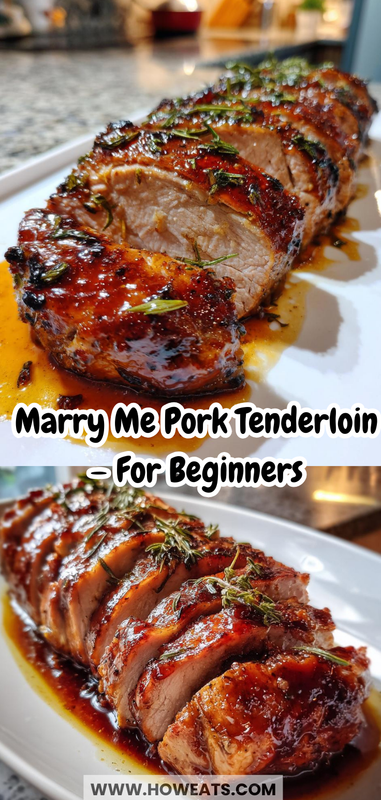
Top 10 Pork Tenderloin Recipes gives you ten juicy, foolproof ways to cook tenderloin, from garlic-herb roast to honey mustard, all ready in 30 minutes.
🧂 Ingredients
- 2 whole pork tenderloins, about 1 lb (450g) each, silver skin trimmed
- 3 tbsp (45ml) olive oil, divided
- 6 garlic cloves, 4 minced and 2 smashed
- 2 tbsp (6g) fresh thyme leaves, plus 4 whole sprigs
- 1 tbsp (15g) Dijon mustard
- 1 tbsp (15g) honey
- 1 1/2 tsp (9g) kosher salt
- 1 tsp (2g) freshly cracked black pepper
- 1/2 cup (120ml) low-sodium chicken broth
- 2 tbsp (28g) cold unsalted butter, cubed
📋 Instructions
- 1Trim and temper — Pat the tenderloins dry with paper towels, pull away the silvery membrane with a thin knife, and let them sit at room temperature for 15 minutes so they cook evenly from edge to center.
- 2Build the rub — Stir together the minced garlic, thyme leaves, Dijon, honey, salt, and pepper into a thick paste, then rub it over every surface of both tenderloins, working it into the crevices.
- 3Sear hard — Heat 2 tbsp (30ml) olive oil in a 12-inch (30cm) oven-safe skillet over medium-high until it shimmers, then lay in the tenderloins and sear 3 minutes per side at 400F (205C) equivalent stovetop heat until deeply golden brown on all four sides, about 12 minutes total.
- 4Add aromatics — Toss in the smashed garlic cloves and thyme sprigs, spoon the rendered fat over the meat, and transfer the skillet to a 425F (220C) oven.
- 5Roast to temperature — Roast 12 to 15 minutes, until an instant-read thermometer inserted at the thickest point reads 140F (60C); the meat should feel springy but not firm when pressed.
- 6Rest the meat — Move the tenderloins to a cutting board, tent loosely with foil, and rest 8 minutes while you make the sauce; the internal temperature will rise to about 145F (63C).
- 7Deglaze the pan — Set the skillet over medium heat, pour in the broth, and scrape up the browned bits with a wooden spoon, simmering 3 minutes until the liquid reduces by half and the edges bubble steadily.
- 8Finish the sauce — Off the heat, whisk in the cold butter one cube at a time until the sauce turns glossy and coats the back of a spoon, then taste and adjust the salt.
- 9Slice and serve — Cut the rested pork against the grain into 1/2-inch (1.3cm) coins, shingle them on a platter, and spoon the pan sauce over the top just before it reaches the table.

Ingrid explores slow travel and cultural immersion, favoring off-season destinations and local experiences. She writes about the logistics of long-term stays and how to connect with communities without being a tourist. Her angle is about depth over distance.