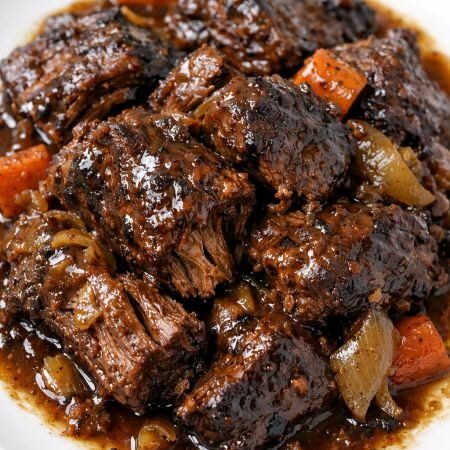
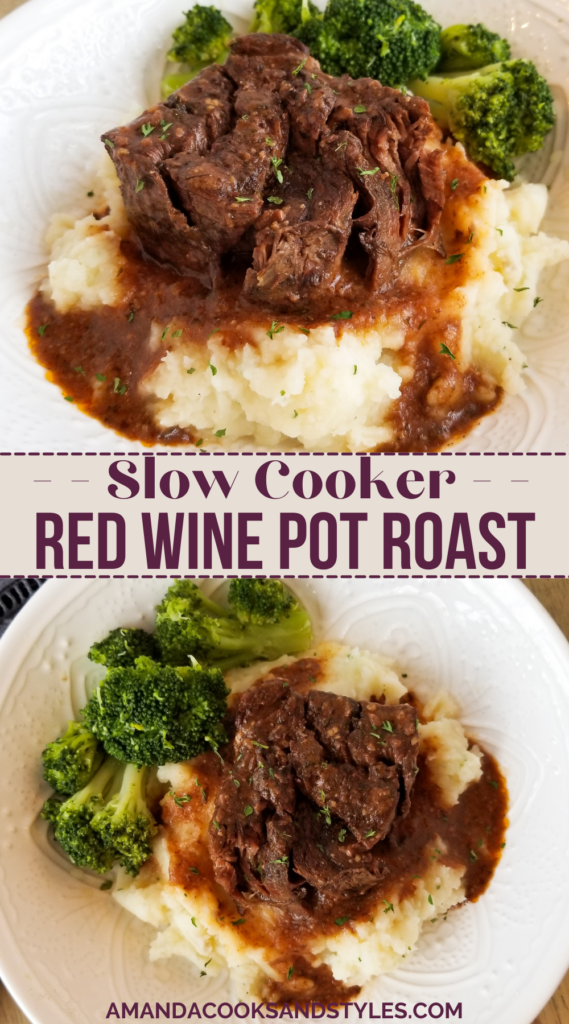
Most slow cooker pot roasts turn out gray, watery, and tasting like boiled beef. That happens because people dump everything in cold and walk away. I don't do that.
Advertisements1
This recipe sears a 4-pound chuck roast first, deglazes the pan with dry red wine, and lets the crockpot run 8 hours on low. The result is meat that shreds under a fork and a gravy that actually tastes like something.
Here's the math: 4 pounds of chuck feeds 6 people at roughly 8 ounces cooked each, and the wine reduces into about 2 cups of sauce. No filler, no canned soup.
Why You'll Love This Recipe
About the Ingredients
4 lb (1.8 kg) boneless beef chuck roast
Look for a roast with heavy marbling and visible connective tissue; that collagen is what melts into gelatin and makes it tender. If chuck is unavailable, use beef brisket point or a 3.5 lb blade roast and add 30 minutes of cook time.
2 tsp kosher salt
Kosher salt flakes season more evenly than fine table salt on a large roast. If you only have table salt, cut the amount to 1 1/2 tsp because the crystals are denser.
1 tsp freshly ground black pepper
Grind it right before seasoning; pre-ground pepper loses its bite within weeks. A coarse grind also gives you better crust formation during the sear.
2 tbsp neutral oil, such as canola or grapeseed
You need a high-smoke-point oil for a hard sear; olive oil will smoke and turn bitter at 450F. Avocado oil works if you have it.
1 large yellow onion, cut into 1-inch wedges
Yellow onions break down into sweetness after 8 hours; white onions stay sharper. Skip red onion here, it turns muddy in long braises.
4 medium carrots, peeled and cut into 2-inch chunks
Cut them thick so they survive 8 hours without turning to mush. Parsnips are a solid swap if you want a slightly sweeter, earthier bite.
1 lb (450 g) baby Yukon Gold potatoes, halved
Baby golds hold their shape better than russets in a wet braise. If using russets, cut them into 2-inch pieces and add them at the 5-hour mark instead.
4 garlic cloves, smashed and peeled
Smashed cloves release more allicin than whole ones but won't burn the way minced garlic does. Jarred garlic is a last resort, use 2 tsp.
1 1/2 cups (360 ml) dry red wine, such as Cabernet Sauvignon or Côtes du Rhône
Use a wine you'd actually drink; cooking wine is salted and tastes flat. A dry Malbec or Zinfandel also works, but avoid sweet reds like Merlot blends with residual sugar.
1 cup (240 ml) low-sodium beef broth
Low-sodium lets you control the final salt level since the wine and beef both add their own. Chicken broth is a fine substitute in a pinch.
2 tbsp tomato paste
Tomato paste adds glutamates that deepen the sauce without making it taste like tomato. Sun-dried tomato paste is a stronger, sweeter alternative.
3 sprigs fresh thyme plus 2 bay leaves
Tie them in cheesecloth or drop them in whole and fish them out later. Dried thyme works at 1 tsp, but skip dried bay, it's flavorless.
Tips & Tricks
- Don't skip the sear. A 4-minute-per-side sear at 450F (230C) builds the Maillard crust that gives the gravy its color and body. Skipping it is the number one reason slow cooker roasts taste bland.
- Layer vegetables on the bottom. The potatoes and carrots act as a rack so the roast doesn't sit in liquid and boil. This single change fixes mushy meat.
- Reduce the sauce after cooking. Strain the liquid into a saucepan and simmer 8-10 minutes at 400F (204C) until it coats a spoon. Straight from the crock it's thin.
- Season at the end, not just the start. The wine and reduced juices concentrate salt over 8 hours, so taste before adding more.
Pro Tips
Step-by-Step Instructions
1. Dry and season the roast
Pat the 4 lb chuck roast completely dry with paper towels, then rub all over with 2 tsp kosher salt and 1 tsp black pepper. Let it sit at room temperature for 20 minutes while you prep the vegetables.
2. Sear at high heat
Heat 2 tbsp neutral oil in a large skillet over high heat until it shimmers, about 450F (230C). Sear the roast 4 minutes per side until deeply golden brown on all surfaces, roughly 8 to 10 minutes total, then transfer to the slow cooker.
3. Build the wine sauce
Lower the skillet to medium and add the onion wedges. Cook 3 minutes until the edges soften, then stir in 2 tbsp tomato paste and 4 smashed garlic cloves and cook 60 seconds until the paste darkens to brick red.
4. Deglaze with red wine
Pour in 1 1/2 cups dry red wine and scrape the browned fond off the bottom with a wooden spoon. Simmer 4 minutes at 400F (204C) until the wine reduces by about a third and no longer smells sharp with alcohol.
5. Layer and load the slow cooker
Scatter the halved potatoes and 2-inch carrot chunks across the bottom of the slow cooker. Set the seared roast on top, then pour the wine mixture and 1 cup beef broth around it. Tuck in 3 thyme sprigs and 2 bay leaves.
6. Cook low and slow
Cover and cook on low for 8 hours, or on high for 4 1/2 hours. The roast is done when a fork twists easily in the center and the meat registers 205F (96C) internally, which is when collagen fully dissolves.
7. Rest the meat
Lift the roast onto a cutting board with two spatulas and tent it loosely with foil. Rest 15 minutes; the internal temperature will climb another 5F (3C) and the fibers relax so it shreds cleanly.
8. Reduce and serve
Strain the cooking liquid into a saucepan, discard the thyme and bay. Simmer 8 to 10 minutes at 400F (204C) until it coats the back of a spoon, then whisk in 1 tbsp cold butter. Shred the beef, return it to the vegetables, and pour the gravy over.
Delicious Variations
Mushroom Umami Version
Add 8 oz sliced cremini mushrooms with the onions and swap 1/2 cup of the broth for 1/2 cup soy sauce for a darker, meatier gravy.
Italian Sunday Gravy
Add one 28 oz can crushed San Marzano tomatoes and 1 tsp dried oregano, then serve the shredded beef over rigatoni instead of potatoes.
Smoky Chipotle Braise
Stir 2 minced chipotles in adobo into the wine mixture and finish with a squeeze of lime; the smoke plays well against Cabernet.
How to Store Beef Pot Roast Red Wine Slow Cooker
Refrigerator
Store shredded beef and vegetables in the gravy in an airtight container up to 4 days. The fat will solidify on top overnight, lift it off if you want a leaner sauce.
Freezer
Freeze in 2-cup portions with plenty of gravy for up to 3 months. Press plastic wrap directly onto the surface before sealing to prevent freezer burn on the exposed meat.
Reheating
Reheat gently in a covered saucepan over medium-low heat for 8 to 10 minutes, adding a splash of broth if the gravy tightens. Never microwave on high or the meat turns rubbery.
Frequently Asked Questions
Q: Can I put frozen beef in a slow cooker?
No, always thaw the roast first. Frozen meat spends too long in the 40F to 140F (4C to 60C) danger zone and will cook unevenly, leaving the center tough while the outside overcooks.
Q: What is the best red wine for pot roast?
Use a dry, full-bodied red like Cabernet Sauvignon, Malbec, or Côtes du Rhône. Avoid anything sweet or labeled cooking wine, which is salted and tastes harsh after reduction.
Q: Why is my slow cooker pot roast tough?
It's almost always undercooked, not overcooked. Chuck roast needs to hit 205F (96C) internally for the collagen to melt, so give it the full 8 hours on low even if it looks done at 6.
Q: Do I really need to sear the meat first?
Yes, if you want real flavor. The sear creates hundreds of browning compounds that dissolve into the sauce during the long cook, and without it the gravy tastes thin and flat.
Q: Can I cook this on high instead of low?
Yes, 4 1/2 hours on high works, but low for 8 hours gives noticeably more tender meat. High heat tightens the muscle fibers faster and can dry out the outer edges.
Buy the chuck roast, not the round. Chuck has the marbling this method needs, and the wine does the rest. Make it Sunday, eat it Tuesday, and tell me the leftovers weren't better. Keep your receipts.
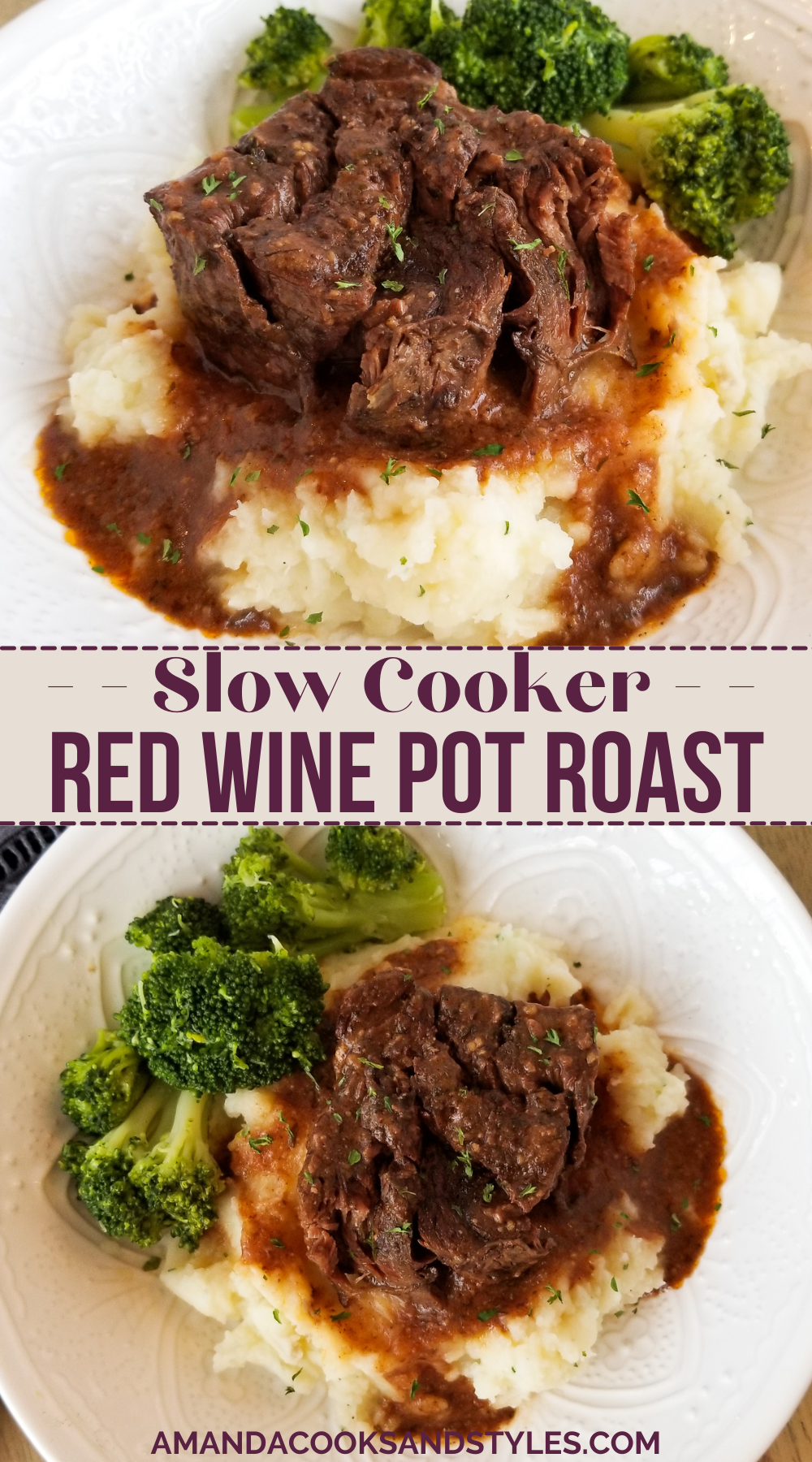
Beef Pot Roast Red Wine Slow Cooker
Beef Pot Roast Red Wine Slow Cooker delivers fork-tender chuck roast in a rich red wine gravy with almost no hands-on work.
🧂 Ingredients
- 4 lb (1.8 kg) boneless beef chuck roast
- 2 tsp kosher salt
- 1 tsp freshly ground black pepper
- 2 tbsp neutral oil, such as canola or grapeseed
- 1 large yellow onion, cut into 1-inch wedges
- 4 medium carrots, peeled and cut into 2-inch chunks
- 1 lb (450 g) baby Yukon Gold potatoes, halved
- 4 garlic cloves, smashed and peeled
- 1 1/2 cups (360 ml) dry red wine, such as Cabernet Sauvignon or Côtes du Rhône
- 1 cup (240 ml) low-sodium beef broth
- 2 tbsp tomato paste
- 3 sprigs fresh thyme plus 2 bay leaves
📋 Instructions
- 1Dry and season the roast — Pat the 4 lb chuck roast completely dry with paper towels, then rub all over with 2 tsp kosher salt and 1 tsp black pepper. Let it sit at room temperature for 20 minutes while you prep the vegetables.
- 2Sear at high heat — Heat 2 tbsp neutral oil in a large skillet over high heat until it shimmers, about 450F (230C). Sear the roast 4 minutes per side until deeply golden brown on all surfaces, roughly 8 to 10 minutes total, then transfer to the slow cooker.
- 3Build the wine sauce — Lower the skillet to medium and add the onion wedges. Cook 3 minutes until the edges soften, then stir in 2 tbsp tomato paste and 4 smashed garlic cloves and cook 60 seconds until the paste darkens to brick red.
- 4Deglaze with red wine — Pour in 1 1/2 cups dry red wine and scrape the browned fond off the bottom with a wooden spoon. Simmer 4 minutes at 400F (204C) until the wine reduces by about a third and no longer smells sharp with alcohol.
- 5Layer and load the slow cooker — Scatter the halved potatoes and 2-inch carrot chunks across the bottom of the slow cooker. Set the seared roast on top, then pour the wine mixture and 1 cup beef broth around it. Tuck in 3 thyme sprigs and 2 bay leaves.
- 6Cook low and slow — Cover and cook on low for 8 hours, or on high for 4 1/2 hours. The roast is done when a fork twists easily in the center and the meat registers 205F (96C) internally, which is when collagen fully dissolves.
- 7Rest the meat — Lift the roast onto a cutting board with two spatulas and tent it loosely with foil. Rest 15 minutes; the internal temperature will climb another 5F (3C) and the fibers relax so it shreds cleanly.
- 8Reduce and serve — Strain the cooking liquid into a saucepan, discard the thyme and bay. Simmer 8 to 10 minutes at 400F (204C) until it coats the back of a spoon, then whisk in 1 tbsp cold butter. Shred the beef, return it to the vegetables, and pour the gravy over.

Diego covers personal finance and side hustles from the perspective of a former gig worker. He breaks down complex money topics into clear, step-by-step plans that anyone can follow. His focus is on building financial confidence through practical experiments and honest numbers.