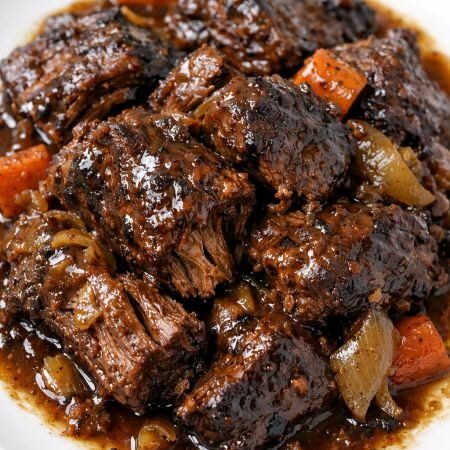
Here is the fact that surprises most people: the classic French beef stew you pay $34 for at a bistro is not a chef's secret. It is a low oven, cheap beef, and patience. That is the whole trick.
Advertisements1
I tested this French Style Beef Stew With Red Wine eleven times, and the version that won was not the one with the fanciest bottle. It was the one where I seared the meat properly and let the oven do the work at 325 degrees Fahrenheit (163 degrees Celsius).
What to avoid: dumping everything in raw and hoping. What to do: brown in batches, deglaze the pan, and give it two hours. The reward is beef that shreds under a spoon and a sauce that clings to it like lacquer.
Why You'll Love This Recipe
About the Ingredients
3 lb (1.36 kg) beef chuck roast, cut into 1 1/2-inch cubes
Chuck is the right cut because the collagen melts into gelatin and makes the sauce silky. If chuck is sold out, use boneless short ribs or bottom round, but add 20 minutes of cook time for round.
2 tsp kosher salt, plus more for finishing
Kosher salt seasons evenly and dissolves fast; table salt is twice as salty by volume, so use half if that is all you have. Buy Diamond Crystal if you can, it is far harder to over-salt with it.
1 tsp freshly ground black pepper
Freshly ground pepper tastes brighter than pre-ground because the oils are still intact. A cheap blade grinder beats the shaker every time here.
3 tbsp olive oil, divided
You need a high-smoke-point fat for the sear; regular olive oil works, but avocado oil gives you a cleaner sear with less smoke. Do not use butter for this step, it burns before the beef browns.
4 oz (115 g) thick-cut bacon, cut into 1/2-inch pieces
Bacon adds smoke and fat that the stew needs. If you skip pork, use 2 tbsp extra olive oil plus 1 tsp smoked paprika for a similar backbone.
1 large yellow onion, diced (about 1 1/2 cups)
Yellow onion gives the deepest sweetness once it caramelizes. Sweet onion works but browns faster, so watch it at the 6-minute mark.
3 medium carrots, cut into 1-inch chunks
Carrots hold their shape for the full braise; if you only have baby carrots, leave them whole and add them 20 minutes later so they do not turn to mush.
3 cloves garlic, minced
Fresh garlic only. The jarred stuff is packed in acid and tastes flat after a long cook, which is exactly when you notice it.
3 tbsp all-purpose flour
Flour thickens the sauce and helps it cling to the beef. For gluten-free, use 1 1/2 tbsp cornstarch whisked into 3 tbsp cold water at the very end instead.
2 cups (480 ml) dry red wine, such as Cotes du Rhone or Cabernet Sauvignon
Use a wine you would actually drink; cooking wine is salted and will wreck the sauce. No alcohol? Use 2 cups beef broth plus 1 tbsp red wine vinegar.
2 cups (480 ml) low-sodium beef broth
Low-sodium matters because the sauce reduces by nearly half and concentrates everything. If you only have regular broth, cut the kosher salt in the recipe to 1 tsp.
2 tbsp tomato paste, plus 1 tsp dried thyme and 2 bay leaves
Tomato paste adds body and umami, not tomato flavor. Buy it in a tube, it keeps for weeks and beats wasting a can.
Tips & Tricks
Do Not Crowd the Pan
Brown the beef in three batches, not one. A crowded pot steams the meat gray instead of searing it brown, and that browning is 80 percent of your final flavor.
Dry the Beef First
Pat every cube with paper towels before it hits the oil. Wet meat will not brown, it will boil in its own moisture and turn tough.
Deglaze Properly
After the onions, pour in the wine and scrape the bottom with a wooden spoon until every brown bit lifts. Those stuck bits are concentrated flavor, not burnt residue to discard.
Salt at the End, Not Just the Start
The sauce reduces by half, so salt added early gets concentrated. Taste after the braise and finish with kosher salt to hit the right level.
Pro Tips
Step-by-Step Instructions
1. Heat Oven and Dry Beef
Set a rack in the lower third of the oven and preheat to 325 degrees Fahrenheit (163 degrees Celsius). Pat the beef cubes completely dry with paper towels, then season all over with 2 tsp kosher salt and 1 tsp pepper. Dry meat browns; wet meat steams.
2. Crisp the Bacon
Heat a large Dutch oven over medium heat for 2 minutes, add the bacon, and cook 6 to 8 minutes until the fat renders and the edges are crisp and golden brown. Remove the bacon with a slotted spoon and leave the fat in the pot.
3. Sear Beef in Batches
Add 1 tbsp olive oil to the bacon fat and raise heat to medium-high until the oil shimmers, about 1 minute. Sear the beef in three batches, 3 to 4 minutes per side, until deeply browned on all sides and the internal temperature reads 130 degrees Fahrenheit (54 degrees Celsius). Move each batch to a plate.
4. Soften Aromatics
Lower heat to medium, add the remaining 2 tbsp oil, then the onion and carrots. Cook 6 to 8 minutes, stirring, until the onions are translucent and the edges turn golden brown. Add the garlic and cook 45 seconds until fragrant, not browned.
5. Build the Sauce
Stir in the tomato paste, flour, thyme, and bay leaves and cook 1 minute to toast the flour. Pour in the wine and scrape the bottom of the pot hard with a wooden spoon until every brown bit dissolves. Simmer 3 to 4 minutes until the wine reduces by about a third and no longer smells sharp.
6. Braise Low and Slow
Return the beef and bacon to the pot, add the broth, and bring to a bare simmer with small bubbles at the edges. Cover and transfer to the oven. Braise 1 hour 45 minutes to 2 hours, until the beef shreds easily under a fork and a cube reads 200 degrees Fahrenheit (93 degrees Celsius) at the center.
7. Thicken and Finish
Move the pot to the stovetop, uncover, and simmer over medium heat 8 to 10 minutes until the sauce coats the back of a spoon and bubbles slowly at the edges. Fish out the bay leaves, taste, and finish with kosher salt. Rest 15 minutes off heat before serving.
8. Serve It Right
Spoon over mashed potatoes, buttered egg noodles, or crusty bread, and scatter with chopped flat-leaf parsley. A glass of the same wine you cooked with is the correct move here.
Delicious Variations
Beef Bourguignon Style
Add 8 oz quartered cremini mushrooms and 1 cup pearl onions in the last 30 minutes of braising for the classic Burgundy version.
Slow Cooker Version
Brown the beef as written, then transfer everything to a slow cooker and cook on low 7 to 8 hours. Thicken on the stovetop at the end, since slow cookers do not reduce sauce.
Instant Pot Shortcut
Sear using the saute function, then pressure cook on high 35 minutes with a 10-minute natural release. Skip the flour and thicken with cornstarch slurry afterward, because flour scorches under pressure.
How to Store French Style Beef Stew With Red Wine Tender & Hearty Recipe Perfect for Cozy Dinners
Refrigerator
Cool within 2 hours, then store in an airtight container up to 4 days. The fat will solidify on top, which actually protects the meat.
Freezer
Freeze in portioned containers up to 3 months. Leave 1 inch of headspace, since the sauce expands. Thaw overnight in the refrigerator, never on the counter.
Reheating
Warm gently in a covered pot over medium-low heat, 10 to 12 minutes, stirring occasionally, until it reaches 165 degrees Fahrenheit (74 degrees Celsius). Add a splash of broth if the sauce looks thick.
Frequently Asked Questions
Q: What is the best wine for French beef stew?
A dry, full-bodied red like Cotes du Rhone, Cabernet Sauvignon, or a Bordeaux blend is the best choice. Avoid anything sweet, oaky, or labeled cooking wine, because those flavors concentrate as the sauce reduces. If you would not drink it from a glass, do not put it in the pot.
Q: Can I make French beef stew without wine?
Yes, use 2 cups beef broth plus 1 tablespoon red wine vinegar to replace the wine. You lose some depth, so add an extra tablespoon of tomato paste and a splash of Worcestershire sauce to compensate. The stew will still be rich and hearty.
Q: Why is my beef stew tough?
Almost always because it was not cooked long enough, not because it cooked too long. Chuck needs 1 hour 45 minutes to 2 hours at 325 degrees Fahrenheit (163 degrees Celsius) for the collagen to melt. If it is still chewy at 2 hours, keep going in 20-minute increments.
Q: Can I make this beef stew in a slow cooker?
Yes, brown the beef and build the sauce on the stovetop first, then cook on low 7 to 8 hours. Slow cookers do not reduce liquid, so finish by simmering uncovered on the stovetop for 8 to 10 minutes to thicken the sauce. Skipping that step leaves you with soup.
Q: What do you serve with French beef stew?
Mashed potatoes, buttered egg noodles, or crusty sourdough are the classic pairings, since all three soak up the sauce. For a lighter plate, serve it over polenta or with a simple green salad dressed in lemon vinaigrette. Avoid plain rice, which disappears under the sauce.
Make this French Style Beef Stew With Red Wine this weekend and let the oven do the heavy lifting. If you try it, tell me in the comments whether you went classic or added mushrooms, and share your pot with someone who needs a warm dinner. Stay curious, stay private.
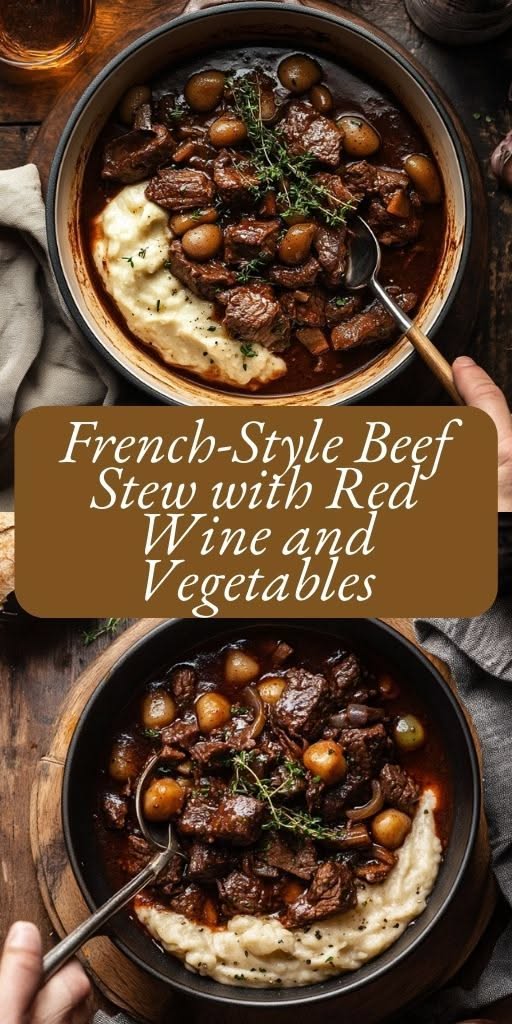
French Style Beef Stew With Red Wine Tender & Hearty Recipe Perfect for Cozy Dinners
French Style Beef Stew With Red Wine delivers fall-apart beef in a glossy, savory sauce, a hearty one-pot dinner that warms you from the inside out.
🧂 Ingredients
- 3 lb (1.36 kg) beef chuck roast, cut into 1 1/2-inch cubes
- 2 tsp kosher salt, plus more for finishing
- 1 tsp freshly ground black pepper
- 3 tbsp olive oil, divided
- 4 oz (115 g) thick-cut bacon, cut into 1/2-inch pieces
- 1 large yellow onion, diced (about 1 1/2 cups)
- 3 medium carrots, cut into 1-inch chunks
- 3 cloves garlic, minced
- 3 tbsp all-purpose flour
- 2 cups (480 ml) dry red wine, such as Cotes du Rhone or Cabernet Sauvignon
- 2 cups (480 ml) low-sodium beef broth
- 2 tbsp tomato paste, plus 1 tsp dried thyme and 2 bay leaves
📋 Instructions
- 1Heat Oven and Dry Beef — Set a rack in the lower third of the oven and preheat to 325 degrees Fahrenheit (163 degrees Celsius). Pat the beef cubes completely dry with paper towels, then season all over with 2 tsp kosher salt and 1 tsp pepper. Dry meat browns; wet meat steams.
- 2Crisp the Bacon — Heat a large Dutch oven over medium heat for 2 minutes, add the bacon, and cook 6 to 8 minutes until the fat renders and the edges are crisp and golden brown. Remove the bacon with a slotted spoon and leave the fat in the pot.
- 3Sear Beef in Batches — Add 1 tbsp olive oil to the bacon fat and raise heat to medium-high until the oil shimmers, about 1 minute. Sear the beef in three batches, 3 to 4 minutes per side, until deeply browned on all sides and the internal temperature reads 130 degrees Fahrenheit (54 degrees Celsius). Move each batch to a plate.
- 4Soften Aromatics — Lower heat to medium, add the remaining 2 tbsp oil, then the onion and carrots. Cook 6 to 8 minutes, stirring, until the onions are translucent and the edges turn golden brown. Add the garlic and cook 45 seconds until fragrant, not browned.
- 5Build the Sauce — Stir in the tomato paste, flour, thyme, and bay leaves and cook 1 minute to toast the flour. Pour in the wine and scrape the bottom of the pot hard with a wooden spoon until every brown bit dissolves. Simmer 3 to 4 minutes until the wine reduces by about a third and no longer smells sharp.
- 6Braise Low and Slow — Return the beef and bacon to the pot, add the broth, and bring to a bare simmer with small bubbles at the edges. Cover and transfer to the oven. Braise 1 hour 45 minutes to 2 hours, until the beef shreds easily under a fork and a cube reads 200 degrees Fahrenheit (93 degrees Celsius) at the center.
- 7Thicken and Finish — Move the pot to the stovetop, uncover, and simmer over medium heat 8 to 10 minutes until the sauce coats the back of a spoon and bubbles slowly at the edges. Fish out the bay leaves, taste, and finish with kosher salt. Rest 15 minutes off heat before serving.
- 8Serve It Right — Spoon over mashed potatoes, buttered egg noodles, or crusty bread, and scatter with chopped flat-leaf parsley. A glass of the same wine you cooked with is the correct move here.

Tom writes about technology and digital privacy, helping readers protect their data and understand how algorithms shape their online experience. He focuses on practical tools and settings that anyone can adjust.